I need the stuffing to taste like Thanksgiving but I do not want to wait until November to eat it. That is the thought that hit me on a random Tuesday in October while staring at a half-empty bag of sourdough bread that was going stale on my counter. The sausage was already defrosting in the fridge because honestly, I had planned to make breakfast sandwiches but then I saw the sage sitting in my herb drawer and my brain just went there. Stuffing. But not the kind you bake inside a bird. The kind that gets all crispy on top and stays soft and buttery underneath. The kind that makes you close the oven door slowly so you do not let the heat out because you are that serious about it.
I have made a lot of stuffing over the years. Boxed stuff, cornbread stuff, gluten-free stuff that tasted like sadness. But sourdough stuffing? That is the one I keep coming back to. The bread holds up better than regular sandwich bread. It does not turn into mush when you pour the broth over it. It soaks up all that sage and sausage flavor while still keeping a little chew. And when you bake it long enough, those top cubes get golden and almost crunchy while the middle stays tender and rich. It is the kind of side dish that steals the whole show. I have seen people skip the turkey entirely just to go back for seconds of this. I do not blame them.
This recipe came together because I wanted something that felt special but did not require a holiday to justify making it. You can throw this together on a random Sunday and suddenly your whole kitchen smells like someone is hosting a feast. The sausage adds that savory depth. The sage brings that earthy warmth. And the sourdough ties it all together like it was meant to be there all along. Trust me on this one.
Why You Will Love This Recipe
I have tested this sourdough stuffing more times than I care to admit. Some batches were too dry. Some were soggy messes. Some just tasted flat no matter how much salt I added. But this version? This is the one I keep making on purpose. Here is why it works so well:
- Quick & Easy: From start to table in about an hour. Most of that time is hands-off baking while you do other things.
- Simple Ingredients: Nothing fancy here. Sourdough bread, breakfast sausage, fresh sage, onions, celery, broth. Chances are you already have most of this in your kitchen.
- Perfect for Any Gathering: Thanksgiving, Friendsgiving, Sunday dinner, or just because you want your house to smell incredible. This stuffing fits every occasion.
- Crowd-Pleaser: I have brought this to potlucks and watched it disappear before the main dishes even hit the table. Kids and adults both go for it.
- Unbelievably Delicious: The edges get crispy, the inside stays moist, and every single bite has that sage-sausage flavor running through it.
What makes this different from every other stuffing recipe out there? It is the sourdough. Regular bread turns into paste if you look at it wrong. Sourdough holds its shape, absorbs the broth at its own pace, and delivers this subtle tang that balances all the savory richness. Plus, I add a little trick with the sausage drippings. You cook the aromatics right in that rendered fat instead of using plain butter. That one change makes the whole dish taste like it simmered for hours.
This is the kind of recipe that makes you feel like a hero at the dinner table. No stress, no complicated techniques, just really good food that people actually get excited about.
What Ingredients You Will Need
This recipe uses simple, everyday ingredients to build layers of flavor without any fuss. Most of these are pantry staples, especially if you keep sourdough bread and breakfast sausage on hand. Here is everything you need:
For the Stuffing Base
- Sourdough bread, 10 cups cubed (about 1 large loaf or 450g) — day-old or slightly stale works best (absorbs broth without turning mushy)
- Breakfast sausage, 1 pound (450g) — I prefer sage-flavored sausage for extra herbiness, but mild or spicy both work
- Unsalted butter, 4 tablespoons (56g) — adds richness and helps brown the vegetables
- Yellow onion, 1 large (about 200g), diced — sweetens as it cooks and forms the aromatic base
- Celery stalks, 3 large (about 150g), diced — that classic stuffing crunch and savory note
- Fresh sage leaves, 2 tablespoons chopped (about 8-10 leaves) — earthy, piney, absolutely non-negotiable here
- Fresh thyme leaves, 1 tablespoon (or 1 teaspoon dried) — subtle lemony herb that brightens everything
- Fresh parsley, ¼ cup chopped — for freshness and color at the end
- Garlic cloves, 3 large, minced — because garlic makes everything better
- Chicken or turkey broth, 2 cups (480ml) — low-sodium so you can control the salt level
- Large eggs, 2 — binds everything together and gives the stuffing structure
- Salt, 1 teaspoon (or to taste)
- Black pepper, ½ teaspoon freshly ground
Ingredient Tips from My Kitchen
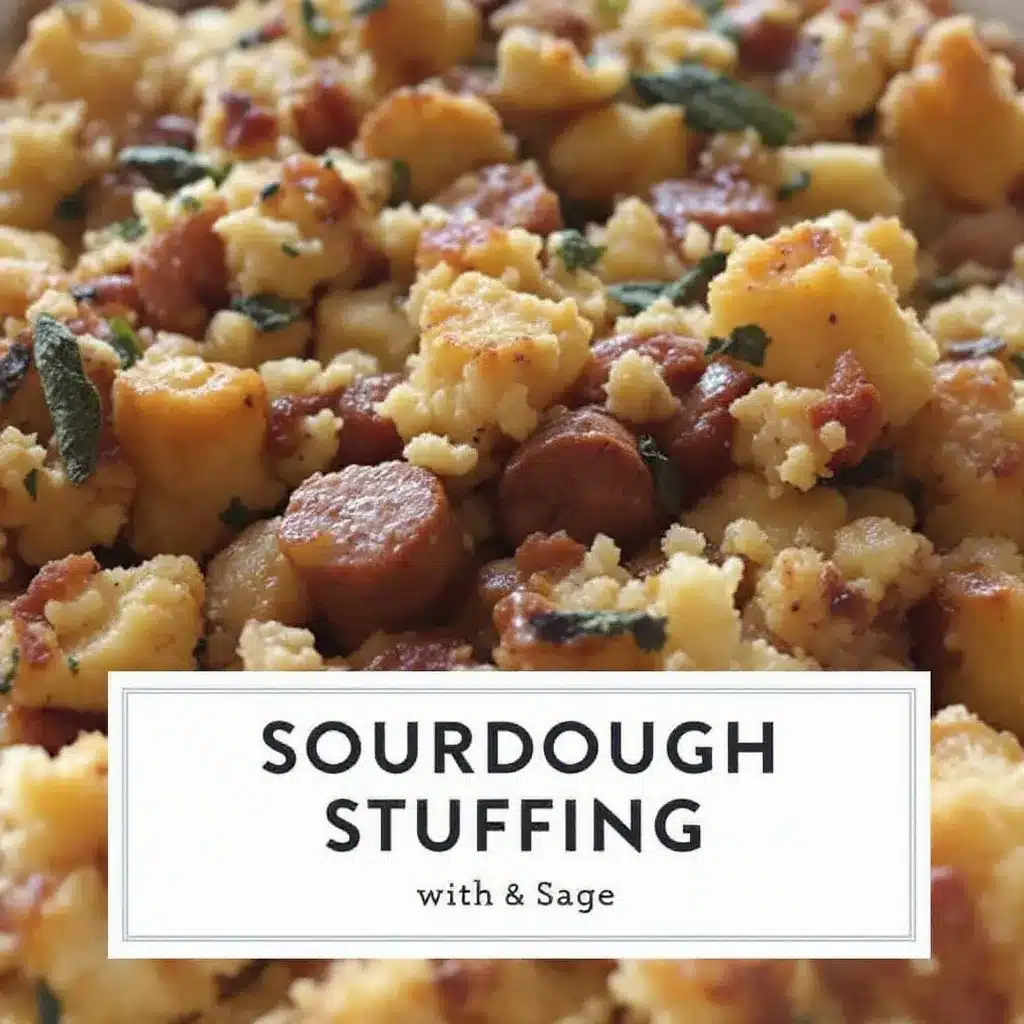
I use Pepperidge Farm Sourdough when I do not have bakery-fresh bread, but any good-quality sourdough with a firm crust works. Avoid the super soft sourdough sandwich bread — it falls apart too fast. For the sausage, Johnsonville makes a great sage-flavored breakfast sausage that I reach for often. If you use loose sausage instead of links, you save yourself the step of removing casings. Look for fresh sage with bright green leaves that feel slightly fuzzy. Dried sage works in a pinch but use half the amount since it is more concentrated. For a gluten-free version, swap in your favorite gluten-free sourdough or sturdy bread. The texture will be slightly different but still delicious.
Equipment Needed
- Large skillet or frying pan (12-inch) — for cooking the sausage and sautéing the vegetables
- Large mixing bowl — big enough to toss all the bread cubes with the broth mixture
- 9×13-inch baking dish (3-quart capacity) — glass or ceramic works best for even baking
- Chef’s knife and cutting board — for dicing onions, celery, and herbs
- Wooden spoon or spatula — for breaking up the sausage as it cooks
- Measuring cups and spoons — for accurate broth and seasoning measurements
- Whisk — for beating the eggs into the broth
- Aluminum foil — for covering the dish during part of the baking time
If you do not have a 9×13 dish, a 10-inch cast iron skillet works beautifully and gives you extra crispy edges. I have also used a 3-quart Dutch oven with great results. Just adjust the baking time by about 5 minutes if using a deeper dish. No need for fancy equipment here — this is a one-pan, one-bowl kind of recipe.
Preparation Method
Step 1: Toast the Bread Cubes
Preheat your oven to 350°F (175°C). Spread the sourdough cubes in a single layer on two large baking sheets. Bake for 12-15 minutes, stirring halfway through, until the edges are dry and lightly golden. Do not let them brown too much — you just want them dried out so they can soak up the broth without turning into paste. Set aside to cool. You can do this step a day ahead and store the cubes in a zip-top bag at room temperature.
Step 2: Cook the Sausage
While the bread toasts, heat a large skillet over medium-high heat. Add the sausage and cook, breaking it into small crumbles with your spoon, for about 6-8 minutes until browned and cooked through. Use a slotted spoon to transfer the sausage to a plate, leaving about 2 tablespoons of the rendered fat in the pan. Do not wipe the pan clean — that fat is liquid gold for flavor.
Step 3: Sauté the Vegetables
Reduce the heat to medium. Add the butter to the same skillet with the sausage drippings. Once it melts, add the diced onion and celery. Cook for 6-7 minutes, stirring occasionally, until the vegetables are soft and translucent. Add the minced garlic, chopped sage, and thyme. Cook for another minute until fragrant. The whole kitchen should smell like Thanksgiving by now.
Step 4: Make the Broth Mixture
In a large measuring cup or medium bowl, whisk together the chicken broth and eggs until fully combined. Season with 1 teaspoon salt and ½ teaspoon black pepper. Set aside. This is your liquid that will bind everything together and keep the stuffing moist.
Step 5: Combine Everything
Transfer the toasted sourdough cubes to a very large mixing bowl. Add the cooked sausage and the sautéed vegetable mixture (including all the buttery bits from the pan). Pour the broth-egg mixture over everything. Use a large spatula or your hands (clean hands work best here) to gently toss and fold until all the bread cubes are evenly moistened. Do not overmix or you will break the bread into crumbs. Let the mixture sit for 5-10 minutes so the bread can absorb the liquid.
Step 6: Bake the Stuffing
Preheat the oven to 375°F (190°C). Transfer the stuffing mixture to a greased 9×13-inch baking dish and spread it into an even layer. Cover tightly with aluminum foil. Bake for 25 minutes. Remove the foil and bake for another 20-25 minutes until the top is golden brown and crispy. The internal temperature should reach 165°F (74°C). Let it rest for 5 minutes before serving. This rest time lets the stuffing set so it holds its shape when you scoop it.
Cooking Tips & Techniques
I have burned more batches of stuffing than I want to admit. Here is what I learned the hard way so you do not have to. First, do not skip toasting the bread. I tried skipping this step once because I was in a hurry and ended up with soggy, sad stuffing that collapsed under its own weight. Toasting removes excess moisture so the bread can absorb the broth without disintegrating. Second, taste your sausage before you add it to the mix. Sausage brands vary wildly in salt and spice levels. If your sausage is already very salty, cut back on the added salt in the broth mixture.
Another thing I learned after my third attempt — let the stuffing rest before baking. That 5-10 minute waiting period after you add the broth is crucial. It gives the bread time to soak up the liquid evenly. If you bake it right away, you end up with dry spots and soggy spots in the same dish. Also, do not pack the stuffing down into the dish. Spoon it in gently and let it sit loosely. Packed stuffing turns dense and heavy. Loosely arranged cubes give you those crispy edges and soft centers that make this dish so good.
For the crispiest top, broil the stuffing for the last 2-3 minutes. Watch it closely because it goes from golden to burnt fast. I learned that lesson when I walked away to answer the phone and came back to a smoking kitchen. Set a timer. Trust me.
Variations & Adaptations
This recipe is flexible enough to handle all kinds of tweaks. Here are some variations I have tried and loved:
- Vegetarian Version: Skip the sausage and use 2 tablespoons olive oil instead of the rendered fat. Add 8 ounces of cremini mushrooms, diced and sautéed until golden, for that savory umami depth. Use vegetable broth instead of chicken broth.
- Apple & Sausage Stuffing: Dice one medium apple (Honeycrisp or Granny Smith) and add it to the skillet with the onions and celery. The sweetness balances the sage beautifully. This is my favorite fall variation.
- Gluten-Free Option: Use gluten-free sourdough or a sturdy gluten-free bread. The texture will be slightly more delicate, so handle it gently when mixing. Reduce the broth to 1¾ cups since gluten-free bread absorbs liquid differently.
- Dried Fruit & Nut Version: Fold in ½ cup dried cranberries or chopped dried apricots and ½ cup toasted pecans or walnuts after mixing. The sweetness and crunch add wonderful contrast.
- Spicy Kick: Use hot Italian sausage instead of breakfast sausage and add a pinch of red pepper flakes with the garlic. Great if you like heat with your herbs.
I personally love the apple version during apple season. It pairs so well with the sage that I sometimes add extra apples just to make sure every bite has some. If you are looking for another cozy fall recipe, these soft baked pumpkin snickerdoodle cookies make the perfect dessert to follow this stuffing.
Serving & Storage Suggestions
Serve this stuffing hot, straight from the baking dish. The top should be golden and crispy, the inside soft and steaming. I like to garnish with a sprinkle of fresh parsley and a few whole sage leaves for color. This stuffing pairs beautifully with roast chicken, turkey, pork chops, or even a simple green salad if you want to keep things light. For a full holiday spread, serve it alongside slow cooker chili with cornbread croutons for a cozy, comforting meal.
For storage, let the stuffing cool completely before transferring it to an airtight container. It keeps in the refrigerator for up to 4 days. The flavors actually get better after a day or two as everything melds together. To reheat, cover with foil and warm in a 350°F (175°C) oven for 15-20 minutes. You can also microwave individual portions in 30-second bursts, but the top will not stay crispy.
This stuffing freezes beautifully. Pack it in a freezer-safe container or zip-top bag and freeze for up to 3 months. Thaw overnight in the refrigerator before reheating. If you are making this for a holiday, you can assemble the entire dish (without baking) a day ahead, cover it, and refrigerate. Just add about 10 extra minutes to the baking time since you are starting from cold. I have done this for Thanksgiving multiple times and it saves so much stress on the day itself. If you are planning a game day spread, this stuffing also pairs surprisingly well with a football charcuterie board with easy sliders.
Nutritional Information & Benefits
Here is the estimated nutritional breakdown per serving (based on 12 servings):
- Calories: 320
- Fat: 18g
- Saturated Fat: 7g
- Carbohydrates: 28g
- Fiber: 2g
- Sugar: 3g
- Protein: 12g
- Sodium: 680mg
This stuffing offers some surprising nutritional perks. Sourdough bread is easier to digest than regular bread because the fermentation process breaks down some of the gluten and phytic acid. Sage is packed with antioxidants and has been used traditionally to support digestion. Sausage adds protein and iron, while celery provides vitamin K and fiber. If you use turkey sausage instead of pork, you can lower the fat content by about 30%. For a lower-sodium version, use low-sodium broth and reduce the added salt to ½ teaspoon. This recipe is not gluten-free as written, but the gluten-free variation works well for those who need it. It contains dairy from the butter, but you can substitute olive oil or a vegan butter alternative for a dairy-free version.
Conclusion
This sourdough stuffing with sausage and sage is the kind of recipe that makes you look forward to leftovers. It is savory, herbaceous, and has that perfect contrast between crispy edges and tender centers. I have made it for Thanksgiving, Friendsgiving, random Sunday dinners, and even a breakfast-for-dinner night where we ate it alongside scrambled eggs. It works everywhere.
I love that this recipe does not demand perfection. If your bread cubes are uneven, that is fine. If you add a little extra sage because you love the flavor, go for it. Cooking should feel like playing, not performing. This stuffing gives you room to adjust and experiment without fear of ruining it. That is the kind of recipe I want in my rotation.
Try this stuffing for your next gathering and watch it disappear. If you make it, come back and tell me how it turned out. Did you add apples? Extra sausage? Did you sneak a bite straight from the baking dish before anyone saw you? I want to hear about it. Leave a comment below or tag me in your photos. Happy cooking, friend.
Frequently Asked Questions
Can I make this stuffing ahead of time?
Absolutely. Assemble the stuffing completely (without baking), cover it tightly, and refrigerate for up to 24 hours. When you are ready to bake, add about 10-15 extra minutes to the covered baking time since you are starting from cold. This is a lifesaver for holiday meal prep.
Can I use dried sage instead of fresh?
Yes, but use half the amount since dried herbs are more concentrated. Substitute 1 tablespoon of dried sage for the 2 tablespoons of fresh. Rub the dried sage between your palms before adding it to release the oils and aroma. The flavor will be slightly different but still delicious.
Why did my stuffing turn out soggy?
Soggy stuffing usually happens for two reasons. Either the bread was not dried out enough before adding the broth, or you added too much liquid. Make sure your bread cubes are thoroughly toasted and dry. Also, let the mixture rest for 5-10 minutes after adding the broth so you can see if it needs more or less liquid. The bread should be moist but not swimming.
Can I use a different type of bread?
Yes, but the texture will change. French bread, ciabatta, or a sturdy whole wheat loaf all work well. Avoid soft sandwich bread or brioche because they break down too quickly. If you use a different bread, keep an eye on the liquid absorption and adjust as needed. Sturdier breads may need a splash more broth.
How do I get extra crispy edges?
For maximum crispiness, spread the stuffing in a thinner layer (use a larger baking dish) and do not cover it during the last 15 minutes of baking. You can also broil it for 2-3 minutes at the end, but watch it closely. If you have a cast iron skillet, use that instead of a glass dish — the metal conducts heat better and gives you more browned bits.
Pin This Recipe!
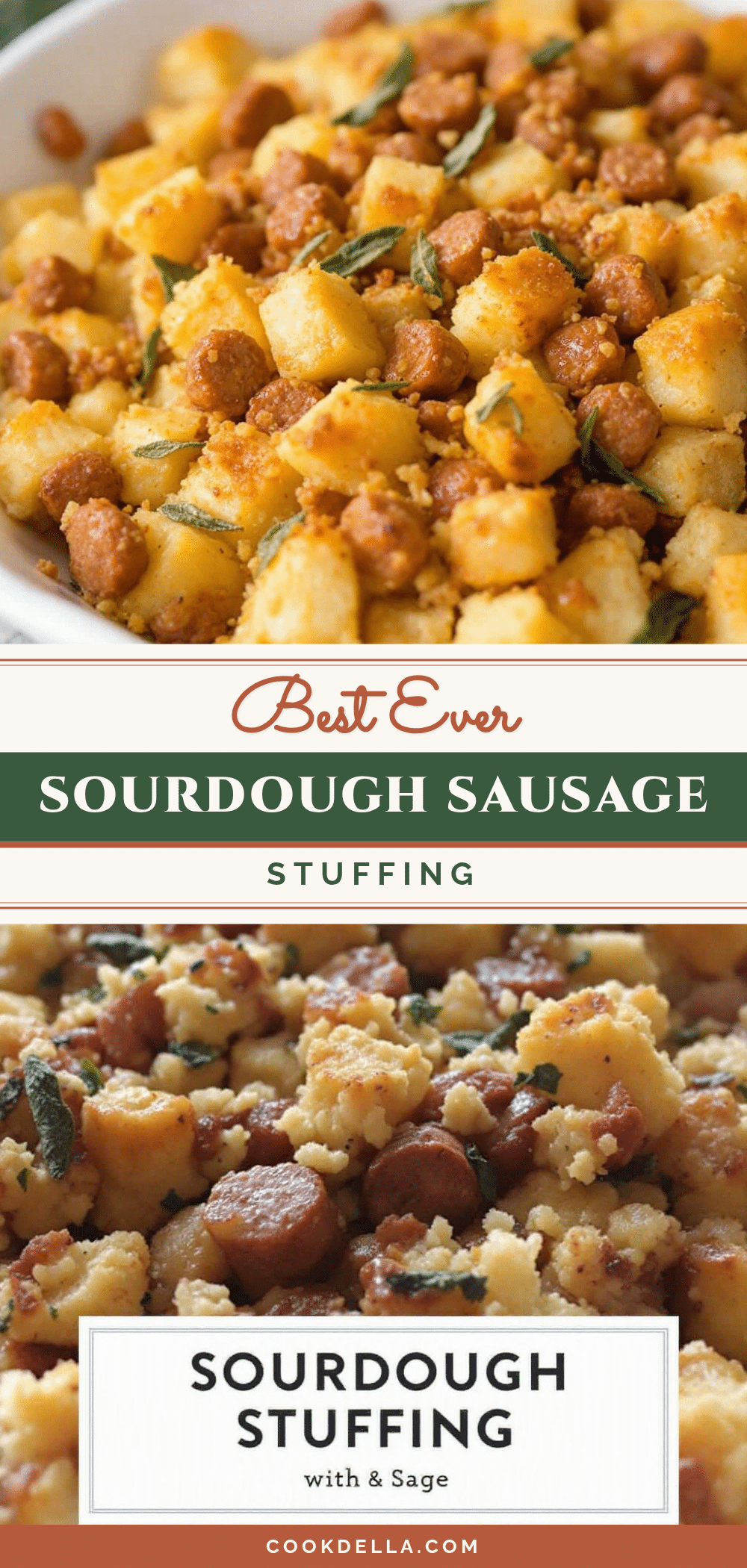
Best Easy Sourdough Stuffing with Sausage & Sage

This sourdough stuffing with sausage and sage is savory, herbaceous, and has the perfect contrast between crispy edges and tender centers. Made with simple ingredients, it’s a crowd-pleaser that works for Thanksgiving, Friendsgiving, or any gathering.
- Prep Time: 15 minutes
- Cook Time: 45 minutes
- Total Time: 1 hour
- Yield: 12 servings 1x
- Category: Side Dish
- Cuisine: American
Ingredients
- 10 cups sourdough bread cubes (about 1 large loaf or 450g), day-old or slightly stale
- 1 pound (450g) breakfast sausage, preferably sage-flavored
- 4 tablespoons (56g) unsalted butter
- 1 large yellow onion (about 200g), diced
- 3 large celery stalks (about 150g), diced
- 2 tablespoons chopped fresh sage leaves (about 8–10 leaves)
- 1 tablespoon fresh thyme leaves (or 1 teaspoon dried)
- 1/4 cup chopped fresh parsley
- 3 large garlic cloves, minced
- 2 cups (480ml) low-sodium chicken or turkey broth
- 2 large eggs
- 1 teaspoon salt (or to taste)
- 1/2 teaspoon freshly ground black pepper
Instructions
- Preheat oven to 350°F (175°C). Spread sourdough cubes in a single layer on two large baking sheets. Bake for 12-15 minutes, stirring halfway, until edges are dry and lightly golden. Set aside to cool.
- While bread toasts, heat a large skillet over medium-high heat. Add sausage and cook, breaking into small crumbles, for 6-8 minutes until browned and cooked through. Transfer sausage to a plate with a slotted spoon, leaving about 2 tablespoons of rendered fat in the pan.
- Reduce heat to medium. Add butter to the same skillet with sausage drippings. Once melted, add diced onion and celery. Cook for 6-7 minutes, stirring occasionally, until soft and translucent. Add minced garlic, chopped sage, and thyme. Cook for 1 minute until fragrant.
- In a large measuring cup or medium bowl, whisk together chicken broth and eggs until fully combined. Season with 1 teaspoon salt and 1/2 teaspoon black pepper. Set aside.
- Transfer toasted sourdough cubes to a very large mixing bowl. Add cooked sausage and sautéed vegetable mixture (including all buttery bits from the pan). Pour broth-egg mixture over everything. Gently toss and fold with a large spatula or clean hands until all bread cubes are evenly moistened. Let mixture sit for 5-10 minutes to absorb liquid.
- Preheat oven to 375°F (190°C). Transfer stuffing mixture to a greased 9×13-inch baking dish and spread into an even layer. Cover tightly with aluminum foil. Bake for 25 minutes. Remove foil and bake for another 20-25 minutes until top is golden brown and crispy (internal temperature should reach 165°F/74°C). Let rest for 5 minutes before serving.
Notes
Do not skip toasting the bread to avoid soggy stuffing. Let the stuffing rest for 5-10 minutes after adding broth so bread absorbs evenly. For extra crispy top, broil for last 2-3 minutes but watch closely. Can be assembled a day ahead and refrigerated unbaked; add 10-15 minutes to covered baking time. Leftovers keep in refrigerator for up to 4 days or freeze for up to 3 months.
Nutrition
- Serving Size: 1 serving (1/12 of r
- Calories: 320
- Sugar: 3
- Sodium: 680
- Fat: 18
- Saturated Fat: 7
- Carbohydrates: 28
- Fiber: 2
- Protein: 12
Keywords: sourdough stuffing, sausage stuffing, Thanksgiving stuffing, easy stuffing recipe, sourdough bread stuffing, sage stuffing, holiday side dish