My neighbor showed up at my door holding a butternut squash the size of a small dog. “I grew too many,” she said, shoving it into my arms. I stood there in my slippers, holding this heavy, awkward vegetable with absolutely no plan for it. The fridge was mostly empty—half a stick of butter, some sage that was starting to look sad, and a wedge of Parmesan with a few good shavings left. I almost laughed. It was one of those moments where you either panic or get creative.
So I got creative. I sliced that squash open (which, honestly, takes more elbow grease than you’d expect), scooped out the seeds, and started roasting it. The butter went into a pan and I watched it foam and turn that nutty, amber color—you know, that smell that makes you feel like everything’s going to be okay. The sage leaves got crispy in the leftover butter. And when I pulled that pan out of the oven, golden and caramelized, I drizzled it all over and stood there eating a piece right off the sheet pan. It was that good.
This cozy roasted butternut squash with brown butter and sage isn’t a fancy recipe. It’s the kind of thing you make when you have one good ingredient and you just trust the process. It’s become my go-to for quiet nights, for fall dinners, for when I want something that feels warm without a lot of effort. And honestly? It’s the recipe that made me realize you don’t need a plan to make something unforgettable.
Why You’ll Love This Recipe
I’ve tested this cozy roasted butternut squash with brown butter and sage about six times now—yes, six. I wanted to get the roasting time just right so the edges get crispy but the inside stays tender, not mushy. And that brown butter? I’ve burned it twice (once badly enough to start over), so you don’t have to. This is the version that works every time.
- Simple Ingredients: You only need a handful of pantry staples. No fancy grocery trips required.
- Quick & Easy: Comes together in about 40 minutes, most of which is hands-off roasting time.
- Perfect for Fall: This is the ultimate cozy side dish for Thanksgiving, Sunday dinners, or a quiet weeknight.
- Crowd-Pleaser: I’ve served this at potlucks and family dinners, and it disappears fast—even from people who swear they don’t like squash.
- Unbelievably Delicious: The nutty brown butter, crispy sage, and caramelized squash combo is next-level comfort food.
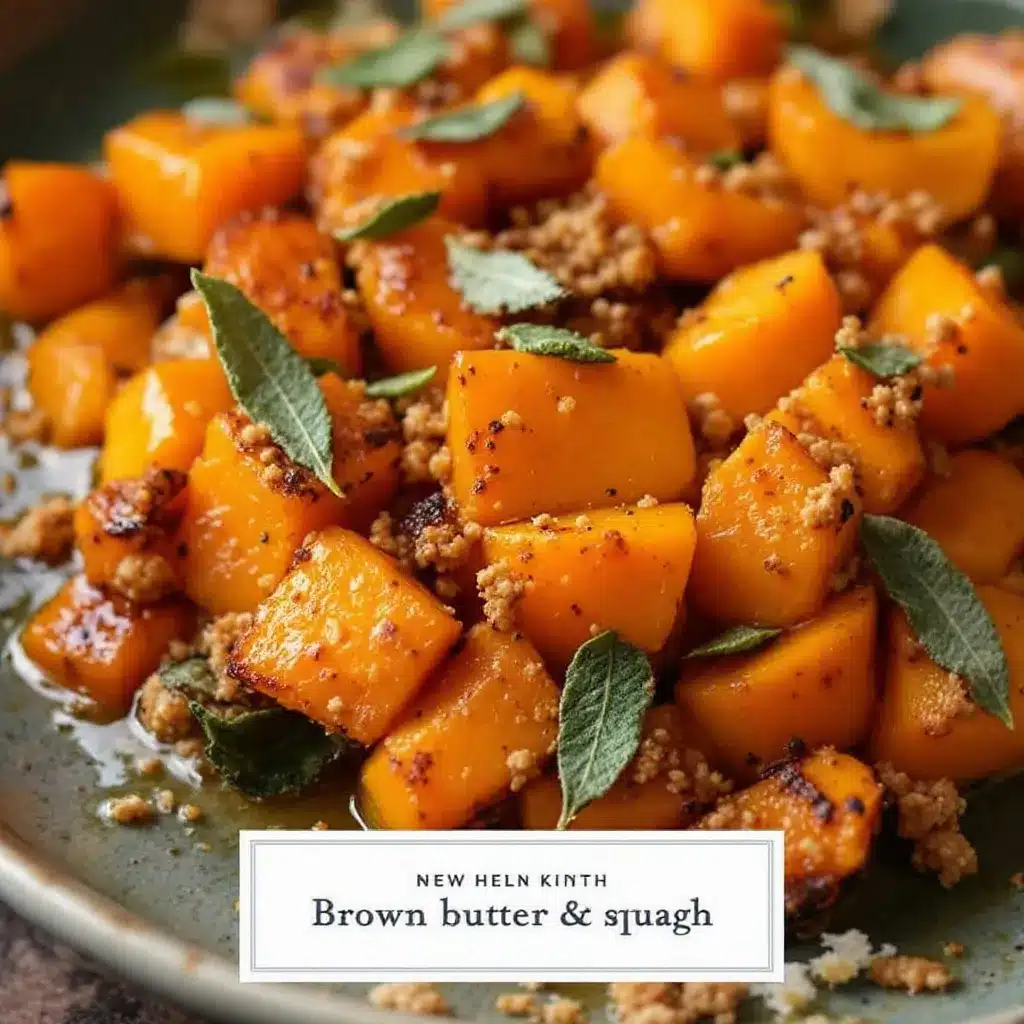
What makes this recipe different from the rest? It’s the technique. Roasting the squash at high heat gives it that deep caramelization, while the brown butter adds a richness you just can’t get from plain olive oil. And the sage? It gets fried in the butter until it’s almost like a chip—crispy, savory, and absolutely addictive. This isn’t just another roasted squash recipe. It’s the one that makes you close your eyes after the first bite.
It’s comfort food reimagined—simple, but with the same soul-soothing satisfaction as a warm bowl of soup or a slice of homemade pie. Perfect for impressing guests without stress, or turning a simple meal into something memorable.
What Ingredients You Will Need
This recipe uses simple, wholesome ingredients to deliver bold flavor and satisfying texture without the fuss. Most of these are probably already in your kitchen—except maybe the squash itself.
- Butternut Squash (1 medium, about 2-3 pounds): Look for one that feels heavy for its size with firm, unblemished skin. Peeled, seeded, and cut into 1-inch cubes. I prefer buying pre-cut cubes from the store when I’m short on time—just make sure they’re all roughly the same size for even roasting.
- Unsalted Butter (4 tablespoons, or ½ stick): This is the star of the show. I use unsalted so I can control the salt level. Kerrygold is my go-to for its rich flavor, but any good quality butter works.
- Fresh Sage Leaves (10-12 leaves): Don’t even think about using dried sage here. Fresh sage is essential for that crispy, fragrant finish. Look for leaves that are bright green and not wilted.
- Olive Oil (2 tablespoons): Helps the squash roast evenly and get those gorgeous golden edges. A good extra virgin olive oil adds a subtle fruity note.
- Salt (1 teaspoon, plus more to taste): I use kosher salt for its clean flavor and easy pinch-ability. Diamond Crystal is my preferred brand.
- Black Pepper (½ teaspoon, freshly ground): Freshly ground pepper makes a difference here—it adds a gentle warmth that complements the squash.
- Maple Syrup (1 tablespoon, optional): A tiny drizzle of maple syrup enhances the squash’s natural sweetness. I add this when I want a touch more caramelization. Use pure maple syrup, not pancake syrup.
- Parmesan Cheese (¼ cup, finely grated, optional): For a savory, umami finish. I sometimes add this right before serving for an extra layer of flavor.
Substitution Guidance: For a dairy-free version, use vegan butter or coconut oil instead of butter—though you’ll lose the brown butter flavor. You can substitute the sage with fresh thyme or rosemary (just remove the stems before serving). If you don’t have maple syrup, a sprinkle of brown sugar works too. And if you’re out of Parmesan, try nutritional yeast for a cheesy, dairy-free alternative.
Equipment Needed
You don’t need a lot of fancy tools for this recipe. Here’s what you’ll need:
- Large Baking Sheet (half-sheet pan, 18×13 inches): A rimmed baking sheet is best to catch any juices. I’ve used my Nordic Ware sheet pan for years—it doesn’t warp and distributes heat evenly.
- Sharp Chef’s Knife: Butternut squash is tough. A good, sharp knife makes peeling and cutting it safe and easy. I recommend a 8-inch chef’s knife.
- Vegetable Peeler: A sturdy Y-peeler works wonders on butternut squash skin. I prefer the Kuhn Rikon brand—it’s sharp and comfortable to hold.
- Small Skillet or Saucepan: For browning the butter. A light-colored pan helps you see the butter change color. Stainless steel or nonstick both work fine.
- Cutting Board: A large, stable cutting board gives you room to work. Wood or plastic—whatever you have.
- Mixing Bowl: For tossing the squash with oil and seasonings before roasting.
- Spatula or Wooden Spoon: For stirring the butter as it browns.
Budget-Friendly Options: If you don’t have a large baking sheet, use two smaller ones—just make sure the squash is in a single layer. No Y-peeler? Use a regular peeler or carefully cut the skin off with a knife. No mixing bowl? Toss everything directly on the baking sheet.
Preparation Method
- Preheat your oven to 425°F (220°C). A hot oven is key for caramelization. While it heats up, get your squash ready.
- Peel and cube the butternut squash. Cut off the top and bottom ends, then use a sharp vegetable peeler to remove the skin. Cut the squash in half where the narrow neck meets the round bottom. Scoop out the seeds from the bulbous end with a spoon (save them for roasting later if you like!). Cut the squash into 1-inch cubes—try to keep them uniform so they cook evenly. This takes about 10 minutes, but you’ll get faster with practice.
- Toss the squash with oil and seasonings. In a large mixing bowl, combine the cubed squash, olive oil, ½ teaspoon of salt, and ¼ teaspoon of black pepper. Toss until every piece is coated. Spread the squash in a single layer on your baking sheet. Don’t overcrowd—if the pieces are touching too much, they’ll steam instead of roast.
- Roast for 25-30 minutes. Place the baking sheet in the preheated oven. Halfway through (around the 12-15 minute mark), use a spatula to flip the pieces. You’re looking for deep golden edges and a fork-tender interior. The squash should be caramelized on the outside but soft on the inside.
- Make the brown butter while the squash roasts. In a small skillet or saucepan, melt the butter over medium heat. Swirl the pan occasionally as it melts. The butter will start to foam—that’s normal. Keep an eye on it. After about 3-4 minutes, you’ll see brown specks forming at the bottom of the pan and smell a nutty aroma. As soon as it turns amber-colored (not dark brown), remove it from the heat immediately. Add the sage leaves to the hot butter—they’ll sizzle and crisp up in about 30 seconds. Be careful not to burn them.
- Drizzle and serve. Transfer the roasted squash to a serving platter. Pour the brown butter and crispy sage leaves over the top. Sprinkle with the remaining salt and pepper. If using, add the maple syrup and grated Parmesan. Toss gently to coat. Serve hot or warm.
Sensory Cues: The squash should look golden with dark brown edges when done. When you poke a piece with a fork, it should slide in easily but the cube should still hold its shape. The brown butter should smell like toasted nuts and caramel—if it smells burnt, start over. The sage leaves should be crispy enough to crumble between your fingers.
Personal Tip: I always roast the squash on the top rack of the oven for better browning. And don’t skip flipping halfway—it makes a huge difference in getting even caramelization.
Cooking Tips & Techniques
I’ve made this cozy roasted butternut squash with brown butter and sage more times than I can count, and I’ve definitely learned a few things the hard way. Here are my best tips:
Don’t rush the browning butter. I know it’s tempting to crank up the heat, but medium heat is your friend. High heat burns the butter before it even has a chance to brown. Keep swirling the pan and watch for those little brown specks. Once you see them, pull it off the heat—the residual heat will keep cooking it.
Dry the sage leaves thoroughly. Wet sage leaves will splatter in the hot butter and won’t get crispy. Pat them dry with a paper towel before adding them to the pan. And don’t overcrowd them—cook them in batches if needed.
Cut the squash evenly. I can’t stress this enough. If some pieces are bigger than others, they’ll cook at different rates. You’ll end up with burnt edges and raw centers. Take the extra minute to make them uniform.
Use a light-colored pan for the butter. Dark nonstick pans make it hard to see the color change. I use a stainless steel skillet and it’s a game-changer for browning butter.
My biggest failure? The first time I made this, I walked away from the butter for “just a second” to check on the squash. By the time I turned around, the butter was black and smoking. The kitchen smelled like a campfire. I had to start over. Now I never leave the stove when browning butter. It only takes a few minutes, so just stay there and watch it.
Variations & Adaptations
This recipe is super flexible. Here are some ways to change it up:
- Maple-Balsamic Version: Add 1 tablespoon of balsamic vinegar along with the maple syrup before roasting. The acidity balances the sweetness beautifully.
- Spicy Kick: Sprinkle red pepper flakes over the finished dish. The heat pairs surprisingly well with the nutty brown butter.
- Herb Swap: Don’t have sage? Use fresh thyme sprigs or rosemary. Strip the leaves from the stems and add them to the brown butter.
- Vegan Adaptation: Use coconut oil or vegan butter instead of dairy butter. The flavor will be different, but still delicious. Add a sprinkle of smoked paprika for depth.
- Air Fryer Method: Toss the cubed squash with oil and seasonings, then air fry at 400°F (200°C) for 12-15 minutes, shaking halfway. Make the brown butter on the stovetop while it cooks.
- Roasted Veggie Medley: Add cubed sweet potatoes, carrots, or Brussels sprouts to the baking sheet. Just make sure everything is cut to a similar size.
Personal Variation: I once added a handful of toasted pecans and dried cranberries right before serving. The crunch and tartness were incredible. It’s now my go-to for holiday dinners.
Serving & Storage Suggestions
This cozy roasted butternut squash with brown butter and sage is best served hot or warm, straight from the oven. I like to transfer it to a large, shallow serving dish so the brown butter pools at the bottom—perfect for sopping up with crusty bread.
What to Serve With It: This dish pairs beautifully with roasted chicken, pork chops, or a flaky lemon garlic butter salmon. For a vegetarian meal, serve it over a bed of quinoa or farro with a handful of arugula. It also makes a stunning side dish for Thanksgiving alongside bright cranberry orange Thanksgiving side salad.
Storage: Store leftovers in an airtight container in the refrigerator for up to 4 days. The squash will soften slightly, but the flavor gets even better as it sits. I actually love eating it cold straight from the fridge—it’s like a savory snack.
Reheating: Reheat in a 350°F (175°C) oven for 5-7 minutes to restore some crispiness. You can also reheat in a skillet over medium heat, stirring occasionally. Avoid the microwave—it makes the squash mushy and the sage leaves soggy.
Freezing: You can freeze the roasted squash (without the brown butter and sage) in a freezer-safe bag for up to 3 months. Thaw in the refrigerator overnight, then reheat and add fresh brown butter and sage.
Nutritional Information & Benefits
Here’s the approximate nutritional breakdown for one serving (about 1 cup, based on 4 servings):
- Calories: 220
- Fat: 14g
- Carbohydrates: 24g
- Fiber: 5g
- Protein: 3g
- Sugar: 6g (natural)
Health Benefits: Butternut squash is packed with vitamin A (great for eye health), vitamin C (immune support), and fiber (digestive health). The sage leaves contain antioxidants and anti-inflammatory compounds. And while butter is high in fat, using it in moderation as part of a balanced diet is totally fine—especially when paired with nutrient-dense vegetables.
Dietary Considerations: This recipe is naturally gluten-free and vegetarian. For a vegan version, use coconut oil or vegan butter. It’s also low-carb friendly if you skip the optional maple syrup.
Personal Perspective: I love that this dish feels indulgent but is actually pretty healthy. It’s the kind of recipe that makes you feel good about eating your vegetables—even when they’re swimming in brown butter.
Conclusion
This cozy roasted butternut squash with brown butter and sage is proof that simple ingredients, treated with care, can create something truly special. It’s warm, comforting, and just a little bit fancy—without any of the stress. Whether you’re serving it for a holiday feast or a quiet Tuesday dinner, it’s the kind of dish that makes everyone at the table smile.
I’d love to hear how it turns out for you! Did you try any variations? Did you add the maple syrup or keep it savory? Drop a comment below and let me know. And if you loved this recipe, share it with a friend who needs a little cozy in their life. Trust me—they’ll thank you.
Frequently Asked Questions
Can I use frozen butternut squash for this recipe?
Yes, but thaw it completely and pat it dry with paper towels before roasting. Frozen squash releases a lot of water, which can make it steam instead of caramelize. You might need to add 5-10 minutes to the roasting time.
How do I know when the brown butter is done?
Watch for the butter to turn a rich amber color and smell nutty and toasty. You’ll also see small brown specks forming at the bottom of the pan. As soon as you see those specks, remove it from the heat—it can go from perfect to burnt in seconds.
Can I make this recipe ahead of time?
Absolutely. Roast the squash up to 2 days in advance and store it in the refrigerator. Make the brown butter and sage fresh just before serving. Reheat the squash in a 350°F oven for 5-7 minutes, then drizzle with the brown butter.
What can I use instead of sage?
Fresh thyme, rosemary, or even oregano work well. Just remember that rosemary has a stronger flavor, so use a little less. Remove the leaves from the stems before adding them to the butter.
Is this recipe keto-friendly?
Yes, if you skip the optional maple syrup. Butternut squash has about 24g of carbs per cup, so enjoy it in moderation if you’re strictly keto. The brown butter and sage add plenty of flavor without any extra sugar.
Pin This Recipe!
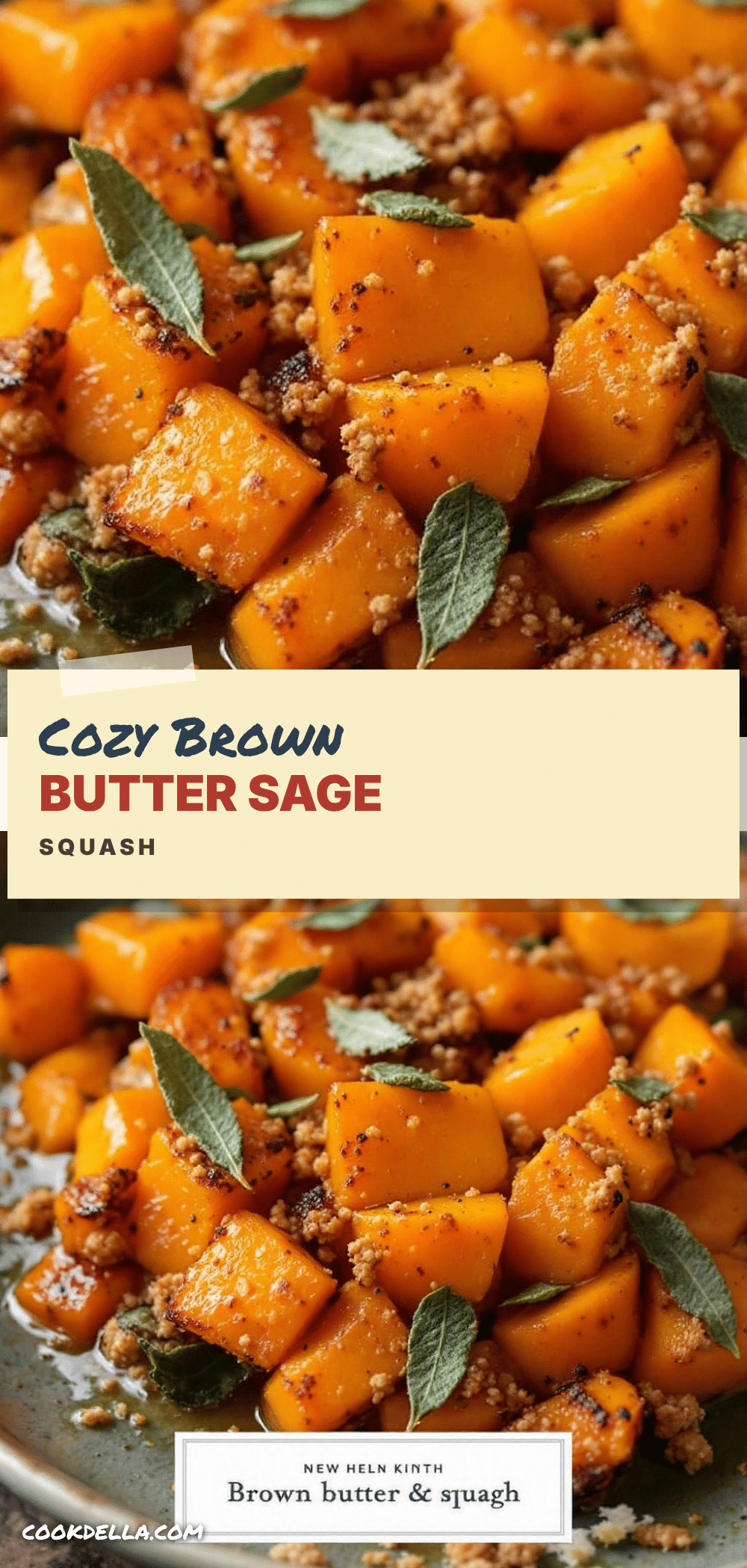
Cozy Roasted Butternut Squash with Brown Butter and Sage
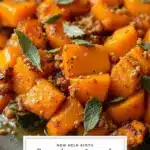
This cozy roasted butternut squash with brown butter and sage is a simple yet elegant side dish featuring caramelized squash, nutty brown butter, and crispy sage leaves. Perfect for fall dinners or holiday feasts, it comes together in about 40 minutes with minimal effort.
- Prep Time: 10 minutes
- Cook Time: 30 minutes
- Total Time: 40 minutes
- Yield: 4 servings 1x
- Category: Side Dish
- Cuisine: American
Ingredients
- 1 medium butternut squash (about 2–3 pounds), peeled, seeded, and cut into 1-inch cubes
- 4 tablespoons unsalted butter (½ stick)
- 10–12 fresh sage leaves
- 2 tablespoons olive oil
- 1 teaspoon kosher salt, plus more to taste
- ½ teaspoon freshly ground black pepper
- 1 tablespoon pure maple syrup (optional)
- ¼ cup finely grated Parmesan cheese (optional)
Instructions
- Preheat your oven to 425°F (220°C).
- Peel and cube the butternut squash: Cut off the top and bottom ends, use a sharp vegetable peeler to remove the skin, cut the squash in half where the narrow neck meets the round bottom, scoop out the seeds, and cut into 1-inch cubes.
- In a large mixing bowl, toss the cubed squash with olive oil, ½ teaspoon salt, and ¼ teaspoon black pepper until evenly coated. Spread in a single layer on a large baking sheet.
- Roast for 25-30 minutes, flipping halfway through (at the 12-15 minute mark), until the squash is golden with dark brown edges and fork-tender.
- While the squash roasts, make the brown butter: In a small skillet or saucepan, melt the butter over medium heat. Swirl occasionally. After 3-4 minutes, when the butter turns amber-colored with brown specks and smells nutty, remove from heat immediately.
- Add the sage leaves to the hot butter; they will sizzle and crisp up in about 30 seconds. Be careful not to burn them.
- Transfer the roasted squash to a serving platter. Pour the brown butter and crispy sage leaves over the top. Sprinkle with remaining salt and pepper. If using, add maple syrup and grated Parmesan. Toss gently to coat. Serve hot or warm.
Notes
For best browning, roast squash on the top rack. Don’t rush the brown butter—use medium heat and watch carefully as it can burn quickly. Dry sage leaves thoroughly before adding to butter to prevent splattering. Cut squash into uniform 1-inch cubes for even cooking. Leftovers can be stored in an airtight container in the refrigerator for up to 4 days. Reheat in a 350°F oven for 5-7 minutes to restore crispiness.
Nutrition
- Serving Size: 1 cup
- Calories: 220
- Sugar: 6
- Sodium: 600
- Fat: 14
- Saturated Fat: 7
- Carbohydrates: 24
- Fiber: 5
- Protein: 3
Keywords: roasted butternut squash, brown butter, sage, fall side dish, Thanksgiving side, easy vegetable recipe, caramelized squash