I ruined chicken salad three times before I made one I actually wanted to eat again. The first batch was so dry it crumbled like sawdust. The second was a watery mess, and the third — well, let’s just say I went overboard on the salt and ended up ordering pizza instead. That was years ago, back when I thought chicken salad was just mayo + chicken + desperation.
Then my neighbor brought over a tub of her version after I had surgery, and I nearly cried into the bowl. It had grapes (whole grapes, not chopped into sad little bits), crunchy pecans, and this creamy dressing that somehow wasn’t gloopy. She shrugged when I asked for the recipe and said, “There’s no real recipe. Just don’t overdress it and use good chicken.” That was it. That was the secret I’d been missing all along.
So I went home and started testing. I burned through three more batches before I landed on the version I make now — the one that friends text me about, unprovoked. This classic chicken salad with grapes and pecans isn’t fancy. It’s not trendy. It’s just honest, satisfying food that works for lunch, a picnic, or those days when you need something cold and comforting straight from the fridge.
Honestly? I think that’s why it stuck.
Why You’ll Love This Recipe
This is the chicken salad you actually want to eat, not the one you settle for because you forgot to meal prep. I’ve tested this version more times than I care to admit, and every tweak was intentional — from the ratio of grapes to pecans to the way the dressing sits overnight without turning watery.
- Quick & Easy : Comes together in under 20 minutes if you use rotisserie chicken. Perfect for busy mornings or last-minute lunches.
- Simple Ingredients : No obscure condiments or fancy grocery runs. You probably have most of this in your kitchen right now.
- Perfect for Meal Prep : This recipe actually gets better after a day in the fridge. The flavors meld, the grapes soften just a little, and the pecans stay surprisingly crunchy if you add them right before serving.
- Crowd-Pleaser : I’ve brought this to potlucks, baby showers, and casual get-togethers. It disappears fast, and people always ask for the recipe.
- Unbelievably Delicious : The texture is what gets you — juicy grapes, crunchy nuts, tender chicken, and a creamy dressing that clings to everything without being heavy.
What makes this different from every other chicken salad recipe out there? It’s the balance. Most versions drown the chicken in mayo or skimp on the mix-ins. This one uses just enough dressing to coat everything, plus a splash of lemon juice and a pinch of salt that makes the flavors pop without overpowering the main ingredients. It’s not just another chicken salad — it’s the one I make for people who say they don’t like chicken salad.
This is the kind of recipe that makes you close your eyes after the first bite. It’s comfort food, plain and simple — no gimmicks, no shortcuts that compromise flavor, just honest cooking that tastes like someone actually cared about what they were making.
What Ingredients You Will Need
This classic chicken salad with grapes and pecans uses simple, everyday ingredients to deliver big flavor without any fuss. Most of these are pantry staples or easy to find at any grocery store. Here’s what you’ll need and why each one matters.
- Cooked chicken breast (about 3 cups, shredded or diced) — Rotisserie chicken works beautifully here. I use a store-bought rotisserie chicken when I’m short on time, but poached chicken breasts give you more control over the moisture level. If you’re cooking your own, season the water with a bay leaf, peppercorns, and a pinch of salt for extra flavor.
- Red grapes (1 cup, halved) — Red grapes are sweeter and firmer than green ones, which makes them ideal for chicken salad. They add little bursts of juice that cut through the richness of the dressing. Seedless is non-negotiable here unless you want to spend 20 minutes picking out seeds.
- Pecans (¾ cup, roughly chopped) — Toast them first. I can’t stress this enough. Raw pecans are fine, but toasted pecans bring a warm, nutty depth that transforms the whole dish. Toast them in a dry skillet over medium heat for 3-4 minutes, shaking the pan frequently, until they smell fragrant.
- Celery (2 stalks, finely diced) — Celery adds crunch and freshness. Make sure you dice it small enough that you don’t get a mouthful of raw celery in one bite. If you’re not a celery fan, you can substitute with diced apple (Granny Smith works great) or finely chopped fennel.
- Mayonnaise (½ cup) — I recommend full-fat mayo for the best texture and flavor. Duke’s is my go-to brand because it’s tangier and less sweet than others. If you’re using a lighter mayo, expect the dressing to be slightly thinner. For a dairy-free option, use vegannaise or a high-quality avocado oil mayo.
- Greek yogurt (¼ cup, plain) — This lightens up the dressing without sacrificing creaminess. Full-fat Greek yogurt works best; non-fat can make the dressing taste a bit thin. If you don’t have Greek yogurt, you can use all mayo or substitute with sour cream for a tangier finish.
- Fresh lemon juice (1 tablespoon) — Fresh is important here. Bottled lemon juice has a flat, almost metallic taste that throws off the balance. The lemon juice brightens everything and keeps the dressing from feeling heavy.
- Dijon mustard (1 teaspoon) — Just a little adds depth without making the salad taste mustardy. If you only have yellow mustard, use half the amount — it’s sharper and more pungent.
- Salt and black pepper (to taste) — Season in layers. Add a pinch of salt to the dressing, then taste the finished salad and adjust from there. I usually end up adding more pepper than I expect.
- Fresh parsley or chives (2 tablespoons, chopped) — Optional but recommended. Fresh herbs add a pop of color and a subtle freshness that rounds out the richness. Chives are especially good here.
Equipment Needed
You don’t need a fancy kitchen to make this recipe. Here’s what you’ll actually use.
- Large mixing bowl — Go for a bowl that’s big enough to toss everything without spilling. I use a ceramic bowl that’s about 3 quarts.
- Cutting board and sharp knife — A good chef’s knife makes dicing celery and halving grapes so much easier. Dull knives crush the grapes instead of slicing them cleanly.
- Small skillet — For toasting the pecans. A non-stick skillet works fine, but any skillet will do.
- Measuring cups and spoons — I know some cooks eyeball everything, but measuring the mayo and yogurt ensures the dressing stays balanced.
- Rubber spatula or wooden spoon — For folding the ingredients together without smashing the grapes or breaking up the chicken too much.
- Fine-mesh strainer — Only if you’re poaching your own chicken. It makes draining the cooked chicken easier.
- Food processor (optional) — If you want to shred cooked chicken in seconds instead of dicing by hand, a food processor with the paddle attachment works great. Just pulse a few times and don’t overdo it.
Budget-friendly tip: If you don’t have a food processor, two forks work perfectly for shredding chicken. It takes a little longer, but the texture is actually better because you have more control.
Preparation Method
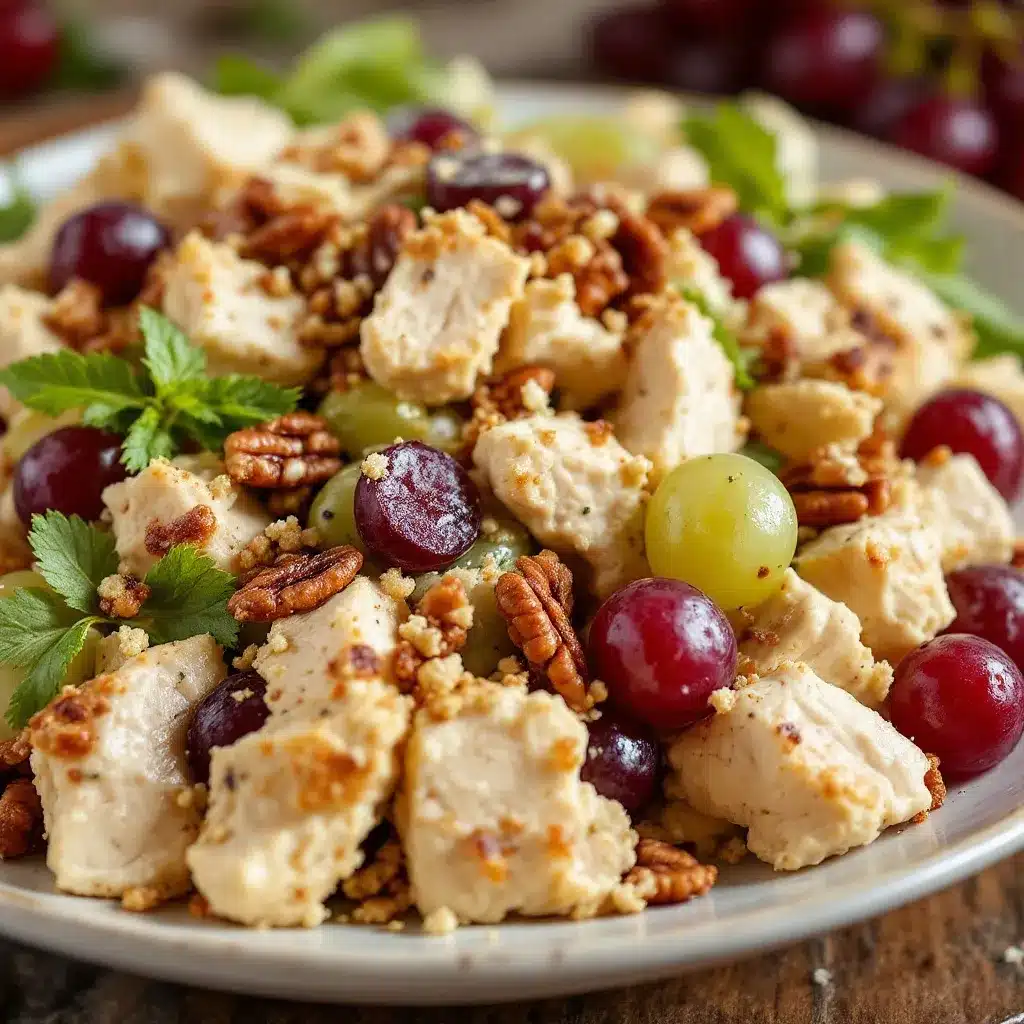
- Prepare the chicken. If you’re using a rotisserie chicken, remove the skin and shred the meat into bite-sized pieces. Discard the bones and skin. You should end up with about 3 cups of shredded chicken. If you’re poaching your own chicken breasts, place them in a pot, cover with cold water, add a bay leaf and a teaspoon of salt, and bring to a gentle simmer. Cook for 12-15 minutes, until the internal temperature reaches 165°F. Let the chicken cool slightly, then shred or dice it.
- Toast the pecans. Heat a small skillet over medium heat. Add the chopped pecans in a single layer. Toast for 3-4 minutes, shaking the pan every 30 seconds, until the pecans are fragrant and slightly darkened. Watch them carefully — they burn fast. Remove from the pan and let them cool completely.
- Prepare the mix-ins. Halve the grapes. If they’re large, quarter them. Dice the celery into small, even pieces — about ¼-inch. Chop the fresh herbs if you’re using them. Set everything aside.
- Make the dressing. In a small bowl, whisk together the mayonnaise, Greek yogurt, lemon juice, Dijon mustard, and a pinch of salt and pepper. Taste it. It should be creamy, tangy, and slightly sharp from the mustard. Adjust the salt if needed.
- Combine the ingredients. In a large mixing bowl, add the shredded chicken, halved grapes, diced celery, and half of the toasted pecans. Pour the dressing over the top. Use a rubber spatula to fold everything together gently. You want the dressing to coat everything evenly without smashing the grapes or breaking up the chicken too much.
- Season and adjust. Taste the chicken salad and add more salt or pepper as needed. If it tastes flat, add another squeeze of lemon juice. If it seems dry, add a tablespoon more mayo or yogurt. Remember: the flavors will deepen as it sits in the fridge, so it’s okay if it tastes slightly under-seasoned right now.
- Chill (optional but recommended). Cover the bowl with plastic wrap or transfer the chicken salad to an airtight container. Refrigerate for at least 30 minutes before serving. This allows the flavors to meld and the dressing to soak into the chicken slightly. If you’re in a hurry, you can serve it immediately — it’ll still be delicious.
- Add remaining pecans before serving. Right before you’re ready to eat, fold in the rest of the toasted pecans. This keeps them crunchy instead of getting soggy from sitting in the dressing.
Sensory cue: At step 5, the chicken salad should look glossy but not wet. The dressing should cling to the chicken and grapes, not pool at the bottom of the bowl. If you see liquid pooling, you’ve added too much dressing or your chicken was too wet. Pat the chicken dry with paper towels next time.
Troubleshooting tip: If your chicken salad tastes watery, the chicken likely wasn’t dry enough before you added the dressing. Pat the shredded chicken with paper towels next time, or let it drain in a fine-mesh strainer for a few minutes before mixing.
Cooking Tips & Techniques
I learned most of these the hard way — by making bad chicken salad and eating it anyway because I didn’t want to waste food. You don’t have to do that.
Don’t overmix. This is the number one mistake people make. The more you stir, the more the chicken breaks down into mush and the grapes start to release their juice. Fold gently, like you’re handling a delicate cake batter. Stop as soon as everything looks evenly coated.
Season in stages. Add a pinch of salt to the dressing, then taste the finished salad, then season again. Seasoning the chicken itself also matters — if you’re using bland rotisserie chicken, your salad will taste flat no matter how good the dressing is. A light sprinkle of salt on the shredded chicken before you add anything else makes a noticeable difference.
Let it rest. I know it’s tempting to eat immediately, but chicken salad that sits for 30 minutes in the fridge tastes exponentially better. The flavors marry, the dressing thickens slightly, and the grapes release just enough juice to create a subtle sweetness throughout. One time I made a batch and ate half right away, then finished the rest the next day. The difference was striking — the next-day version was so much better I felt cheated.
Toast your nuts. I already said this, but it bears repeating. Raw pecans are fine. Toasted pecans are transformative. The heat releases their natural oils and deepens their flavor in a way that makes the whole salad taste more complex. Just don’t walk away while they’re toasting. Burnt pecans are bitter and will ruin the whole batch.
Timing strategy: If you’re making this for a lunch event or picnic, prep everything the night before but keep the pecans and dressing separate. Combine the chicken, grapes, and celery in one bowl, whisk the dressing in another, and store the pecans in a sealed bag. Mix it all together right before you leave. Your chicken salad will taste fresher and the pecans will stay crunchy.
Variations & Adaptations
This classic chicken salad with grapes and pecans is a great base for experimentation. Here are a few variations I’ve tried and loved.
Herby Chicken Salad : Swap the parsley for fresh dill and tarragon. Dill gives it a bright, almost pickly freshness, while tarragon adds a subtle licorice note that pairs beautifully with the grapes. I made this version for a bridal shower and got more compliments than I expected.
Spicy Southwest Twist : Add ¼ cup of canned black beans (rinsed and drained), ¼ cup of corn kernels (fresh or frozen and thawed), and a minced jalapeño. Replace the Dijon mustard with a squeeze of lime juice and a pinch of cumin. The pecans still work here, but you could also use roasted pepitas for a more southwestern feel.
Low-Carb / Keto Version : Skip the grapes and use diced cucumber or chopped celery instead. Add a few chopped pickles for acidity. Use full-fat mayo and Greek yogurt to keep the fat content high. The pecans are already keto-friendly, so no changes needed there.
Curry Chicken Salad : Add 1 teaspoon of curry powder and ¼ teaspoon of turmeric to the dressing. Swap the grapes for diced apple (Honeycrisp or Fuji work well) and the pecans for sliced almonds. This version is fantastic on its own or stuffed into a pita.
Dairy-Free Adaptation : Replace the Greek yogurt with an extra ¼ cup of mayo or use a dairy-free yogurt alternative. Just make sure it’s plain and unsweetened. Coconut yogurt can work, but it will add a slight coconut flavor that might clash with the grapes — test a small batch first.
My personal favorite variation is the herby one. I made it last spring when I had leftover dill from a salmon recipe and didn’t want it to go to waste. It was one of those happy accidents that turned into a regular rotation.
Serving & Storage Suggestions
This chicken salad is versatile enough to serve in several different ways, depending on your mood or occasion.
Serving temperature: I prefer it cold, straight from the fridge. Some people like it at room temperature, which is fine too. Just don’t let it sit out for more than two hours if you’re serving it at a picnic or potluck.
Presentation ideas: Serve it on a bed of crisp lettuce leaves for a low-carb option. Pile it onto toasted croissants or sourdough bread for a classic lunch. Spoon it into halved avocados for a trendy, healthy twist. For parties, serve it in endive boats or mini phyllo cups — they look fancy but take almost no effort.
Complementary dishes: This chicken salad pairs beautifully with a simple tomato soup or a light cucumber mint green tea cooler for a refreshing contrast. If you’re serving it as part of a spread, add a side of Mediterranean chickpea and feta stuffed mini peppers for extra color and crunch.
Storage instructions: Store the chicken salad in an airtight container in the refrigerator for up to 4 days. Do not freeze it — the texture of the grapes and mayo will break down and become watery when thawed.
Reheating: This is a cold dish, so there’s no reheating involved. If you’ve stored it for a few days and the dressing seems a little thick, stir in a teaspoon of milk or a squeeze of lemon juice to loosen it up.
Flavor development note: The flavors actually improve after 24 hours in the fridge. The chicken absorbs the dressing, the grapes release a bit of sweetness, and everything melds together. The only thing that suffers is the pecan crunch, which is why I always add half of them fresh before serving.
Nutritional Information & Benefits
Here’s an approximate nutritional breakdown per serving (based on 6 servings, using full-fat mayo and Greek yogurt):
- Calories: 345
- Protein: 28g
- Fat: 22g
- Carbohydrates: 10g
- Fiber: 2g
- Sugar: 6g
This chicken salad is a good source of lean protein from the chicken, which supports muscle health and keeps you full longer. The pecans provide healthy monounsaturated fats, vitamin E, and magnesium. Grapes add antioxidants like resveratrol, which supports heart health, plus a natural sweetness that makes the salad feel indulgent without added sugar.
Dietary considerations: This recipe is naturally gluten-free and nut-free if you omit the pecans (though obviously it won’t be the same). For a lower-fat version, use light mayo and non-fat Greek yogurt. For a dairy-free version, swap the yogurt for extra mayo or a plant-based alternative. The recipe is not keto-friendly in its original form due to the grapes, but the low-carb variation above works well.
Potential allergens: Contains dairy (Greek yogurt) and tree nuts (pecans). The mayo is egg-based, so if you have an egg allergy, use an egg-free mayonnaise alternative.
Honestly? I don’t make this chicken salad because it’s healthy, though it certainly isn’t bad for you. I make it because it tastes good and makes me feel good eating it. That balance matters more to me than counting every gram of fat.
Conclusion
This classic chicken salad with grapes and pecans is one of those recipes that proves simple food can still be extraordinary. It doesn’t need complicated techniques or exotic ingredients. It just needs good chicken, fresh grapes, crunchy pecans, and a dressing that knows when to step back and let the ingredients shine.
I’ve made this for sick friends, for lazy Sunday lunches, for picnics where it got devoured before I could grab a plate. Every time, someone asks for the recipe, and every time, I feel a little proud that something so simple can bring that much joy. That’s the thing about good food — it doesn’t have to be fancy to be memorable.
Try this recipe and make it your own. Add more grapes if you like them. Swap the pecans for walnuts. Throw in some dried cranberries or a pinch of paprika. The base is solid, and the possibilities are endless.
If you make it, I’d love to hear how it turned out. Leave a comment below or tag me in your photos — nothing makes my day like seeing someone else fall in love with a recipe I’ve spent years perfecting.
Happy cooking, friends.
Frequently Asked Questions
Can I make this chicken salad ahead of time?
Absolutely. In fact, it tastes better after sitting in the fridge for a few hours or overnight. Just add the remaining toasted pecans right before serving to keep them crunchy.
How long does homemade chicken salad last in the fridge?
Stored in an airtight container, it will stay fresh for up to 4 days. If you notice any off smells or the texture seems slimy, toss it — better safe than sorry.
Can I use canned chicken instead of fresh?
You can, but I don’t recommend it. Canned chicken has a mushy texture and a metallic taste that doesn’t work well here. If you’re short on time, a rotisserie chicken from the store is a much better option.
What can I substitute for pecans?
Walnuts, sliced almonds, or even toasted sunflower seeds work great. If you’re making it for someone with a nut allergy, skip the nuts entirely and add extra celery or diced apple for crunch.
Is this chicken salad gluten-free?
Yes, as written, this recipe is naturally gluten-free. Just double-check your mayo and Dijon mustard labels to make sure there’s no hidden gluten. Most brands are safe, but it’s always worth verifying.
Pin This Recipe!
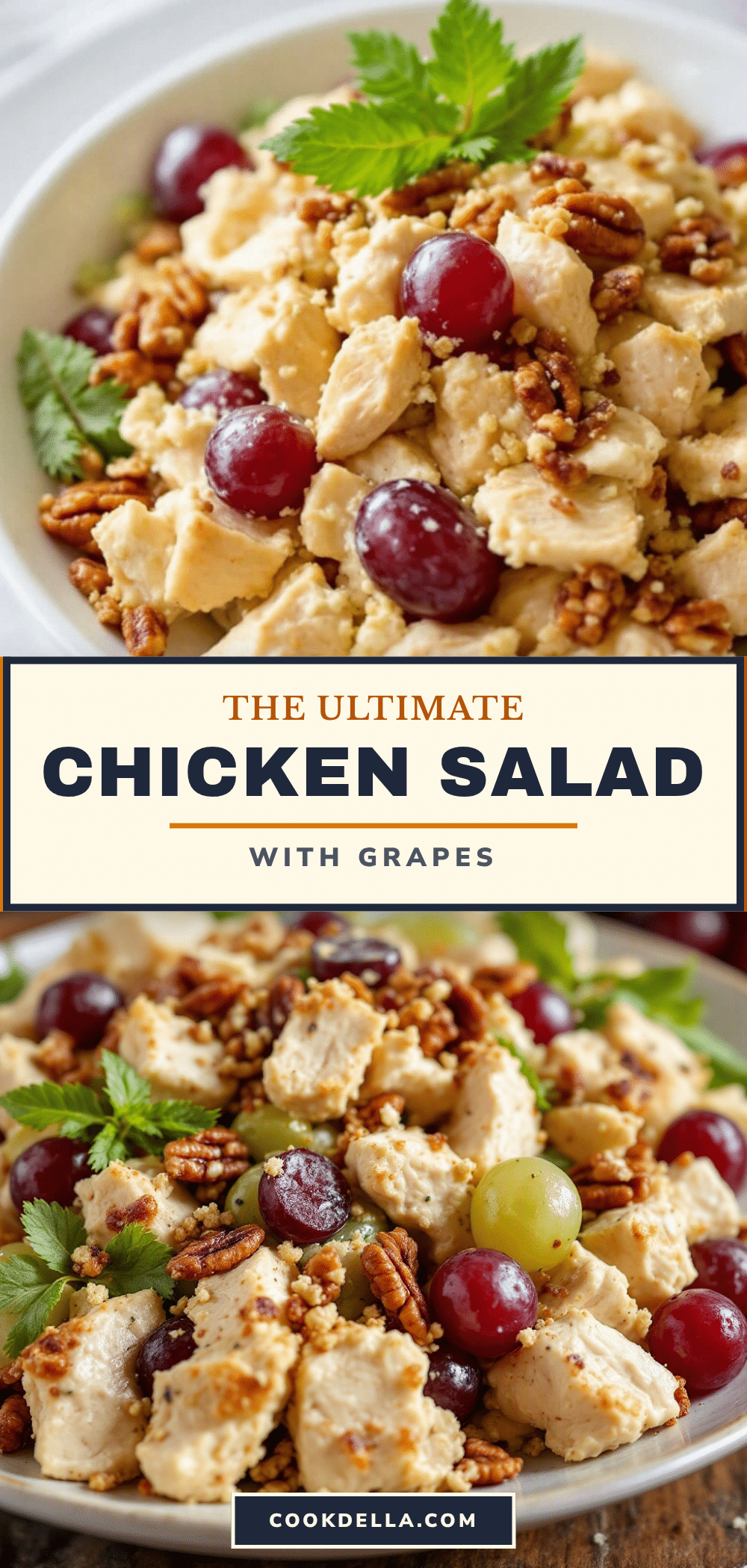
Classic Chicken Salad with Grapes and Pecans: Best Easy Lunch
This classic chicken salad with grapes and pecans is a creamy, crunchy, and satisfying lunch that comes together in under 20 minutes. It’s perfect for meal prep, potlucks, or a quick and easy meal.
- Prep Time: 15 minutes
- Cook Time: 15 minutes
- Total Time: 30 minutes
- Yield: 6 servings 1x
- Category: Main Course
- Cuisine: American
Ingredients
- 3 cups cooked chicken breast, shredded or diced (about 1 rotisserie chicken)
- 1 cup red grapes, halved
- 3/4 cup pecans, roughly chopped and toasted
- 2 stalks celery, finely diced
- 1/2 cup mayonnaise (full-fat recommended)
- 1/4 cup plain Greek yogurt (full-fat recommended)
- 1 tablespoon fresh lemon juice
- 1 teaspoon Dijon mustard
- Salt and black pepper to taste
- 2 tablespoons fresh parsley or chives, chopped (optional)
Instructions
- Prepare the chicken: If using rotisserie chicken, remove skin and shred meat into bite-sized pieces. If poaching, place chicken breasts in a pot, cover with cold water, add a bay leaf and 1 teaspoon salt, bring to a gentle simmer, and cook for 12-15 minutes until internal temperature reaches 165°F. Let cool slightly, then shred or dice.
- Toast the pecans: Heat a small skillet over medium heat. Add chopped pecans in a single layer. Toast for 3-4 minutes, shaking the pan every 30 seconds, until fragrant and slightly darkened. Remove from pan and let cool completely.
- Prepare the mix-ins: Halve the grapes (quarter if large). Dice celery into small, even pieces (about 1/4-inch). Chop fresh herbs if using. Set aside.
- Make the dressing: In a small bowl, whisk together mayonnaise, Greek yogurt, lemon juice, Dijon mustard, and a pinch of salt and pepper. Taste and adjust salt if needed.
- Combine the ingredients: In a large mixing bowl, add shredded chicken, halved grapes, diced celery, and half of the toasted pecans. Pour dressing over the top. Use a rubber spatula to fold everything together gently until evenly coated.
- Season and adjust: Taste and add more salt or pepper as needed. If it tastes flat, add another squeeze of lemon juice. If dry, add a tablespoon more mayo or yogurt.
- Chill (optional but recommended): Cover bowl with plastic wrap or transfer to an airtight container. Refrigerate for at least 30 minutes to allow flavors to meld.
- Add remaining pecans before serving: Right before serving, fold in the rest of the toasted pecans to keep them crunchy.
Notes
For best results, toast the pecans and add half just before serving to maintain crunch. The salad tastes even better after 24 hours in the fridge. If using rotisserie chicken, pat it dry with paper towels to avoid a watery dressing.
Nutrition
- Serving Size: 1 serving (about 1 c
- Calories: 345
- Sugar: 6
- Sodium: 450
- Fat: 22
- Saturated Fat: 4
- Carbohydrates: 10
- Fiber: 2
- Protein: 28
Keywords: chicken salad, grapes, pecans, easy lunch, meal prep, classic chicken salad