I was standing in the school pick-up line when my phone buzzed. A mom I barely knew was texting me—she’d gotten my number from the class parent.
“Hey, my son said your rainbow fruit kabobs were the best birthday treat he’s ever had. Could you send me the recipe?”
I smiled, honestly a little surprised. I’d only thrown them together the night before because I’d forgotten about the classroom birthday celebration until my daughter reminded me at bedtime. I had a bunch of fruit in the fridge, some wooden skewers leftover from a summer barbecue, and about twenty minutes before I needed to crash.
That was two years ago. Now, every time a birthday rolls around in our school, I get the same request. These easy rainbow fruit kabobs have become the unofficial classroom treat for our group, and I never get tired of hearing how the kids light up when they see them.
There’s something about fruit on a stick that makes it feel like a party. Maybe it’s the colors, or the fact that you can eat it with your hands. Or maybe it’s just that it tastes like summer, even in the middle of February.
Why You’ll Love This Recipe
I’ve tested a lot of birthday treat ideas over the years, and I keep coming back to these. Here’s why they work so well, especially for school:
- Nut-Free and Allergy-Friendly : No peanuts, no dairy, no gluten. Every kid can enjoy them without worry.
- Quick to Assemble : You can prep the fruit in fifteen minutes and have the kabobs ready in under thirty. I’ve done it after work more times than I can count.
- No Baking Required : No oven, no stove, no melted chocolate to clean up. Just a cutting board and a knife.
- Visually Stunning : The rainbow pattern is genuinely beautiful. Kids gravitate toward color, and these kabobs look like edible art.
- Actually Healthy : This is a treat you can feel good about sending to school. It’s fruit, plain and simple, but it feels special.
What makes these different from every other fruit skewer recipe? It’s the color order. I spent a few early attempts figuring out which fruits hold up best on a skewer and which colors pop most against each other. The result is a kabob that looks intentional, not random. And that matters when you’re handing them out to a class of twenty-five kids.
Plus, there’s something emotional about watching a kid pick up a rainbow kabob. They don’t just eat it—they admire it first. That pause, that moment of “wow,” is worth every minute of prep.
What Ingredients You Will Need
This recipe uses simple, fresh ingredients that are easy to find at any grocery store. The key is choosing fruit that is ripe but still firm enough to hold its shape on a skewer.
- Strawberries (red) : About 1 pound. Look for berries that are bright red and firm, not mushy. I like to buy them a day ahead so they’re perfectly ripe but not leaking juice.
- Oranges or Mandarin Oranges (orange) : 3 to 4 medium oranges. You can also use canned mandarin oranges in juice, just drain them well. Fresh oranges give a better texture.
- Pineapple (yellow) : 1 small pineapple, or 2 cups of pre-cut pineapple chunks. Fresh pineapple is ideal, but frozen chunks (thawed and patted dry) work in a pinch.
- Green Grapes (green) : 1 large bunch. Seedless grapes are non-negotiable here. Look for grapes that are plump and not wrinkled.
- Blueberries (blue) : 1 pint. Fresh blueberries hold up much better than frozen. If you must use frozen, thaw them completely and pat them dry.
- Purple Grapes or Blackberries (purple) : 1 bunch of purple grapes or 1 container of blackberries. Blackberries add a nice texture contrast, but purple grapes are sturdier for little hands.
- Wooden Skewers : 6-inch skewers work best for kids. You can find them at any grocery store or online. Soak them in water for 10 minutes before using to prevent splintering.
I personally prefer using Driscoll’s berries because they’re consistently fresh and flavorful. When strawberries are out of season, I sometimes swap in watermelon for the red layer—it adds a juicy crunch that kids love.
For the orange layer, I’ve used both fresh navel oranges and the little Cuties clementines. Both work, but Cuties are easier to peel and segment, which saves time.
If you’re making these for a school event with allergy restrictions, you’re already in the clear—no nuts, dairy, gluten, or eggs anywhere in sight. That alone makes this a go-to treat for inclusive classrooms.
Equipment Needed
You don’t need fancy tools for this recipe, which is part of why I love it. Here’s what you’ll need:
- Cutting Board : A large, stable cutting board makes prep faster. I use a bamboo board because it doesn’t dull my knives.
- Sharp Knife : A good chef’s knife or paring knife is essential for cutting fruit cleanly. Dull knives crush fruit and make a mess.
- Wooden Skewers (6-inch) : These are the perfect size for kids. You can also use 8-inch skewers and break them in half.
- Large Bowl of Water : For soaking the skewers. This step prevents splintering and keeps the wood from drying out.
- Paper Towels : For drying fruit after washing. Wet fruit makes kabobs slide around.
- Platter or Sheet Pan : To hold the assembled kabobs. A rimmed sheet pan works great because it catches any drips.
- Optional: Melon Baller : If you’re using watermelon or cantaloupe, a melon baller creates uniform shapes that look professional.
I’ve made these kabobs with just a butter knife and a fork when I was traveling and forgot my knife roll. It’s doable, but a sharp knife saves you ten minutes of frustration. If you’re on a budget, a basic $10 chef’s knife from a kitchen supply store will do the job beautifully.
One tip: don’t use plastic skewers. They’re harder to push through fruit and tend to snap. Wooden skewers are cheap, biodegradable, and much easier to work with.
Preparation Method
Let’s get into the actual steps. I’ve broken this down so you can follow along without any guesswork.
- Soak the skewers. Place your wooden skewers in a large bowl of water and let them soak for at least 10 minutes. This prevents them from splintering when you push them through the fruit. While they soak, you can prep the fruit.
- Wash all the fruit. Rinse strawberries, grapes, blueberries, and blackberries under cool running water. Pat them dry with paper towels. Wet fruit makes the kabobs slippery and can cause the fruit to slide off.
- Prep the strawberries. Remove the green tops and slice each strawberry into halves or thick slices, depending on size. You want each piece to be about the same thickness—around 1/2 inch works well. Set them aside on a plate.
- Prep the oranges. Peel the oranges and separate them into segments. If you’re using mandarins or Cuties, just peel and separate. For larger oranges, you may want to cut each segment in half crosswise so they’re not too big for the skewer.
- Prep the pineapple. Cut off the top and bottom of the pineapple, then slice off the skin. Remove any remaining eyes with a small knife. Cut the pineapple into 1-inch chunks. If you’re using pre-cut pineapple, just cut any large pieces down to size.
- Prep the grapes. Leave green grapes whole. For purple grapes, you can leave them whole or cut them in half if they’re very large. Kids prefer whole grapes—they’re easier to eat.
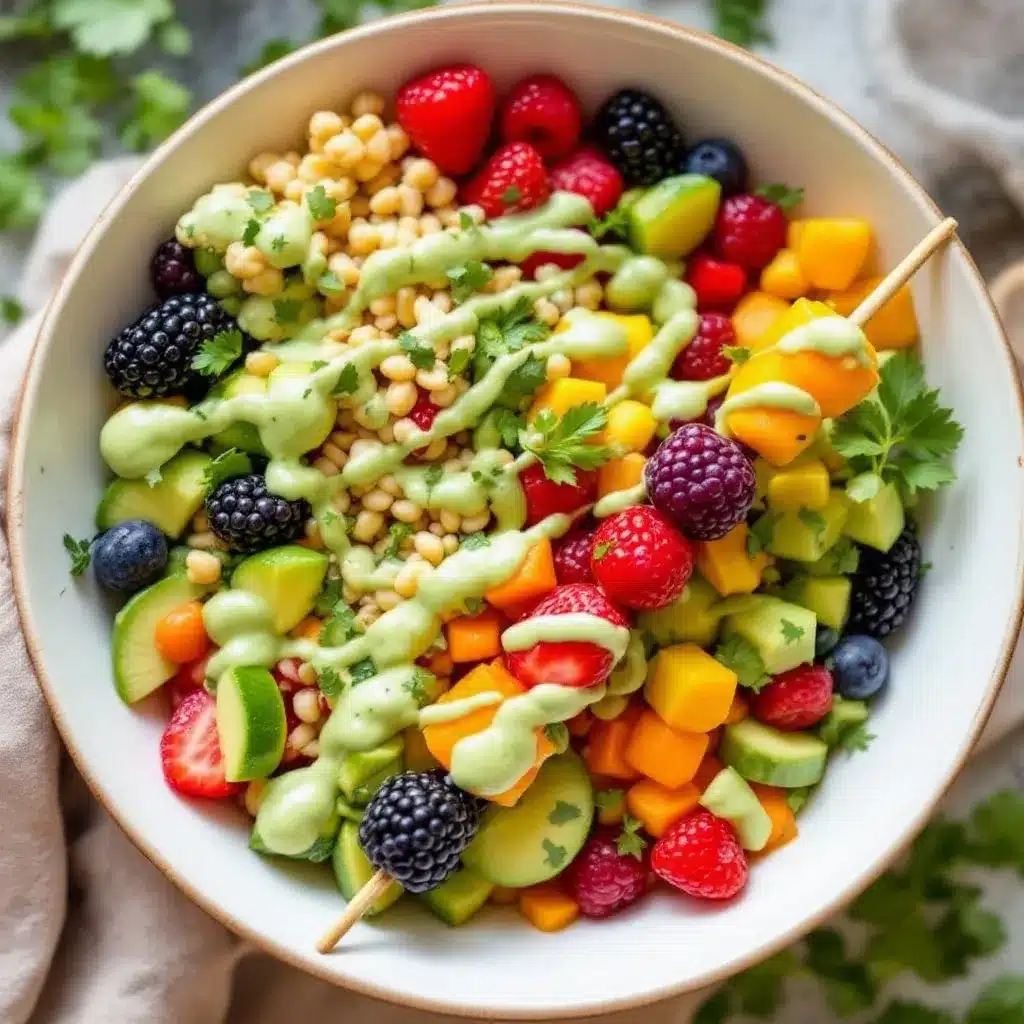
- Arrange your fruit in rainbow order. Set up six small bowls or plates in this order: red (strawberries), orange (oranges), yellow (pineapple), green (grapes), blue (blueberries), purple (purple grapes or blackberries). This makes assembly much faster.
- Assemble the kabobs. Take a soaked skewer and start threading the fruit in rainbow order. Begin with a strawberry (red), then add an orange segment, then a pineapple chunk, then a green grape, then a blueberry, and finally a purple grape or blackberry. Repeat the pattern until the skewer is full, leaving about 1/2 inch at the bottom for a handle.
- Repeat for all kabobs. Depending on the size of your fruit pieces, you should get about 20 to 24 kabobs from this recipe. I usually aim for 22, which covers a class of 20 with a couple of extras.
- Arrange on a platter. Place the finished kabobs on a clean platter or sheet pan. Cover them loosely with plastic wrap and refrigerate until you’re ready to serve.
Here’s a pro tip I learned the hard way: don’t overcrowd the skewer. Leave a tiny gap between each piece of fruit. This makes the kabob easier to eat and prevents the fruit from getting squished. Plus, it looks prettier.
If you’re making these the night before, store them in an airtight container in the fridge. They’ll stay fresh for up to 24 hours. Any longer and the fruit starts to weep, which makes the kabobs soggy.
Cooking Tips & Techniques
I’ve made these rainbow fruit kabobs at least thirty times, and I’ve made every mistake you can imagine. Here’s what I’ve learned:
Don’t skip soaking the skewers. The first time I made these, I skipped this step because I was in a hurry. Halfway through assembly, a skewer splintered and I had to start over. Soaking for ten minutes prevents that entirely.
Cut fruit into uniform sizes. This isn’t just about aesthetics—it’s about practicality. When all the pieces are roughly the same size, the kabob looks balanced and the kids can eat them more easily. Aim for pieces that are about 1 inch in diameter.
Use a paper towel to dry blueberries. Blueberries have a natural waxy coating that can make them slippery. Patting them dry helps them stay put on the skewer.
Thread fruit gently. Push the skewer through the center of each piece, not the edge. If you push through the edge, the fruit will tear and slide off. Take your time with this step—it makes a difference.
Make extra for the parents. I always end up making a few extra kabobs because the moms and dads at pickup always ask for one. It’s become a running joke in our carpool line.
One time, I tried to rush through assembly while helping my daughter with homework. I ended up with a kabob that had three strawberries in a row and no purple grapes. My daughter called it “the sad kabob.” Lesson learned: give yourself ten minutes of uninterrupted time.
For consistency, I recommend assembling the kabobs in the same order every time. I start with red and work my way through the rainbow. It becomes muscle memory after a few batches.
Variations & Adaptations
This recipe is endlessly adaptable. Here are some variations I’ve tried and loved:
- Seasonal Swap : In summer, I replace pineapple with fresh mango or peaches. In fall, I use apple slices (dipped in lemon water to prevent browning) and pear chunks. The rainbow stays intact, but the flavors change with the season.
- Berry Lover’s Version : If your kid is obsessed with berries, swap the pineapple and grapes for raspberries and blackberries. The texture gets softer, but the flavor is incredible.
- Tropical Twist : Use mango, kiwi, papaya, and starfruit for a tropical rainbow. This is a hit at summer parties and beach days.
- Low-Sugar Option : Skip the pineapple and grapes (which are higher in sugar) and use more berries and citrus. The kabobs are still colorful and sweet, just with less natural sugar.
- Dip It : Serve with a side of Greek yogurt mixed with a little honey, or a small cup of melted dark chocolate for dipping. This turns the kabobs into a dessert experience.
I once made a “monochrome” version for a friend’s daughter who only wanted to eat purple foods. I used purple grapes, blackberries, and blueberries. It wasn’t a rainbow, but she loved it. Sometimes you just have to meet kids where they are.
For kids with texture sensitivities, I recommend cutting all fruit into very small pieces—about half the size you’d normally use. It makes the kabobs easier to chew and less intimidating.
Serving & Storage Suggestions
These kabobs are best served cold, straight from the fridge. The fruit stays crisp and refreshing, which is especially nice on warm days.
For school birthday treats, I arrange the kabobs on a large platter in rainbow order—rows of red, orange, yellow, green, blue, and purple. It looks like a edible rainbow, and the kids always gasp when they see it.
You can also stand the kabobs upright in a tall glass or mason jar for a more dramatic presentation. I did this for a classroom party, and the teacher took a picture to send to the parents. It’s that pretty.
Storage: Store leftover kabobs in an airtight container in the refrigerator for up to 24 hours. After that, the fruit starts to release moisture and the kabobs become less appealing. I don’t recommend freezing them—the texture of thawed fruit is mushy and unappetizing.
Reheating: You don’t need to reheat these, but if you’ve refrigerated them for a few hours, let them sit at room temperature for 10 minutes before serving. This takes the chill off and brings out the fruit’s natural sweetness.
One thing I’ve noticed: the flavors actually meld together a bit after a few hours in the fridge. The pineapple absorbs a hint of strawberry, and the grapes take on a touch of citrus. It’s subtle, but it makes the kabobs taste even better the next day.
If you’re packing these for a school lunch, place them in a small container with a lid. Add a piece of parchment paper between the kabobs to prevent them from sticking together. Pair them with a healthy rainbow veggie bento box for kids for a lunch that’s as colorful as it is nutritious.
Nutritional Information & Benefits
Each rainbow fruit kabob (using the ingredients listed above) contains approximately:
- Calories: 45–60
- Carbohydrates: 12–15g
- Fiber: 2–3g
- Sugar: 8–10g (natural sugars from fruit)
- Vitamin C: 30–40% of daily value
- Potassium: 150–200mg
These kabobs are naturally gluten-free, dairy-free, nut-free, and vegan. They’re also free from added sugars and artificial ingredients, which makes them a smart choice for school treats.
The combination of berries and citrus provides a hefty dose of vitamin C, which supports immune health. Pineapple contains bromelain, an enzyme that aids digestion. And the fiber from the fruit helps keep kids full and focused through the afternoon.
From a wellness perspective, I love that these kabobs let kids enjoy a treat without the sugar crash that comes from processed snacks. They’re sweet enough to feel like a celebration, but wholesome enough to feel good about serving.
If you’re looking for other nut-free school lunch ideas, try these easy sunflower butter and jelly uncrustables—they’re another classroom-safe favorite.
Conclusion
These easy rainbow fruit kabobs have become more than just a recipe in my house. They’re the treat I reach for when I want to make a birthday feel special without spending hours in the kitchen. They’re the snack that makes kids smile and parents breathe a sigh of relief because there’s nothing to worry about—no allergens, no mess, no fuss.
I love that you can customize them to whatever fruit is in season, or whatever your kid is obsessed with that week. And I love that they’re beautiful enough to impress a classroom full of five-year-olds, but simple enough that you can throw them together on a Tuesday night.
If you make these, I’d love to hear how they turned out. Did your kids love them? Did you try a fun variation? Drop a comment below and let me know. And if you’re looking for more school-friendly treats, check out these easy freezer mini pizza bagel bites—they’re another lunchbox hero.
Happy snacking, friends. You’ve got this.
Frequently Asked Questions
Can I make these rainbow fruit kabobs the night before?
Yes, you can assemble them up to 24 hours in advance. Store them in an airtight container in the refrigerator. Just be aware that the fruit may release some moisture overnight, so pat them dry with a paper towel before serving for the best look.
How many kabobs does this recipe make?
This recipe makes about 20 to 24 kabobs, depending on the size of your fruit pieces. I usually aim for 22, which covers a standard classroom of 20 kids with a couple of extras for the teacher.
Can I use frozen fruit for these kabobs?
You can use frozen fruit in a pinch, but fresh fruit is strongly recommended. Frozen fruit becomes mushy as it thaws and doesn’t hold its shape on the skewer. If you must use frozen fruit, thaw it completely and pat it very dry before assembling.
What’s the best way to transport these to school?
I arrange the kabobs on a rimmed sheet pan and cover them loosely with plastic wrap. Then I slide the whole pan into a large grocery bag for easy carrying. At school, I transfer them to a platter for presentation.
Are these kabobs safe for kids with food allergies?
Yes, these kabobs are naturally free from the top nine allergens: peanuts, tree nuts, dairy, eggs, soy, wheat, fish, shellfish, and sesame. However, always check the labels on any pre-cut fruit or packaged items to be safe. And if you’re serving them in a classroom with severe allergies, confirm with the teacher first.
Pin This Recipe!
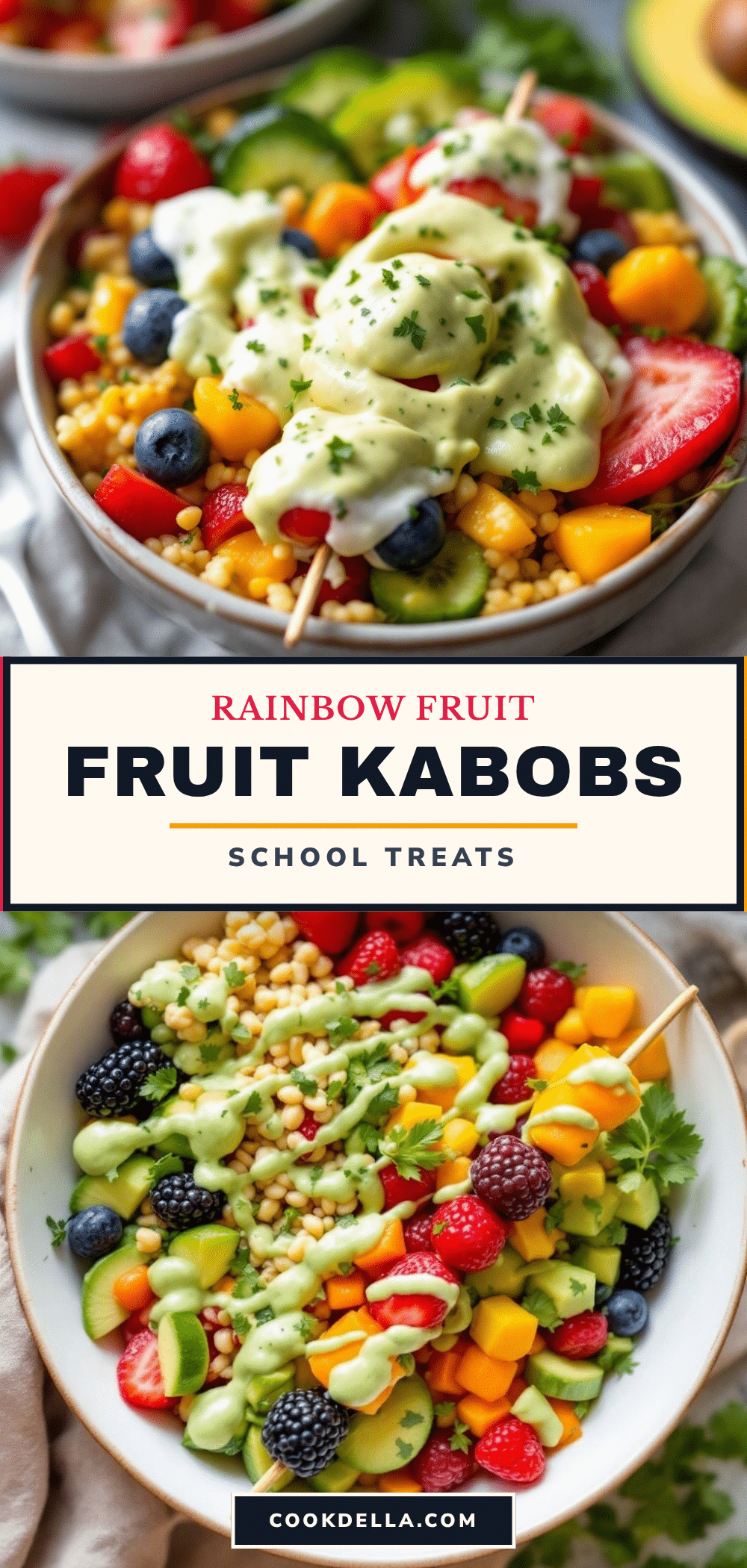
Easy Rainbow Fruit Kabobs: Best School Birthday Treats
These easy rainbow fruit kabobs are the perfect nut-free, allergy-friendly birthday treat for school. Quick to assemble with no baking required, they’re visually stunning and actually healthy.
- Prep Time: 15 minutes
- Cook Time: 0 minutes
- Total Time: 25 minutes
- Yield: 20 to 24 kabobs 1x
- Category: Snack
- Cuisine: American
Ingredients
- 1 pound strawberries (red)
- 3 to 4 medium oranges or mandarin oranges (orange)
- 1 small pineapple or 2 cups pre-cut pineapple chunks (yellow)
- 1 large bunch seedless green grapes (green)
- 1 pint blueberries (blue)
- 1 bunch purple grapes or 1 container blackberries (purple)
- Wooden skewers (6-inch)
Instructions
- Soak the wooden skewers in a large bowl of water for at least 10 minutes to prevent splintering.
- Wash all fruit under cool running water and pat dry with paper towels.
- Remove green tops from strawberries and slice into halves or thick slices (about 1/2 inch).
- Peel oranges and separate into segments. For larger oranges, cut segments in half crosswise.
- Cut off top and bottom of pineapple, slice off skin, remove eyes, and cut into 1-inch chunks.
- Leave green grapes whole. For purple grapes, leave whole or cut in half if large.
- Arrange fruit in rainbow order: red (strawberries), orange (oranges), yellow (pineapple), green (grapes), blue (blueberries), purple (purple grapes or blackberries).
- Thread fruit onto soaked skewers in rainbow order, starting with strawberry, then orange, pineapple, green grape, blueberry, and purple grape or blackberry. Repeat pattern until skewer is full, leaving about 1/2 inch at bottom for handle.
- Repeat for all kabobs (makes about 20 to 24).
- Arrange on a platter or sheet pan, cover loosely with plastic wrap, and refrigerate until ready to serve.
Notes
Soak skewers for 10 minutes to prevent splintering. Cut fruit into uniform sizes (about 1 inch) for balanced kabobs. Pat blueberries dry to help them stay on skewer. Thread fruit gently through center. Store in airtight container in fridge for up to 24 hours. For best results, serve cold.
Nutrition
- Serving Size: 1 kabob
- Calories: 4560
- Sugar: 810
- Carbohydrates: 1215
- Fiber: 23
Keywords: rainbow fruit kabobs, school birthday treats, nut-free, allergy-friendly, fruit skewers, healthy snack, no-bake