Third time in as many weeks I found myself arranging figs in concentric circles on a wooden board, and honestly, I still wasn’t tired of it. The first attempt was purely accidental — I had a leftover wedge of Manchego, a jar of honey that needed using, and a single perfect fig from the farmer’s market that I couldn’t resist. By the second go-round, I was making a grocery list specifically for this. The third time? That’s when I realized this wasn’t just a snack situation. It was a full-blown seasonal ritual, and I needed to write it down before I forgot what made it click.
There’s something about the way a ripe fig yields under your knife, that sticky-sweet honeycomb dripping over a hunk of salty cheese, the crunch of a candied pecan against a smear of pumpkin butter. It’s not just a charcuterie board — it’s a snapshot of everything good about autumn, piled onto a single platter. And the best part? It takes maybe twenty minutes to assemble, but it looks like you spent hours fussing over it. That’s my favorite kind of cooking, honestly. The kind that feels like cheating but tastes like effort.
This board became my go-to for everything. A quiet Friday night with a glass of red wine, a last-minute friend drop-in, even a little pre-dinner grazing before a bigger meal. It never fails to make people stop and stare for a second before they start grabbing. And I think that’s the real magic of a good charcuterie board — it invites connection without demanding attention. You just set it out, and the rest happens naturally.
Why You’ll Love This Recipe
I’ve assembled a lot of boards over the years, and this one hits different. It’s not just about throwing cheese and crackers on a plate. This board has a point of view — a fall-forward, cozy, slightly sweet-and-savory balance that keeps you coming back for one more bite. Here’s why it works:
- Comes together in 20 minutes — No cooking required, just slicing and arranging. Perfect for busy weeknights or surprise guests.
- Uses simple, seasonal ingredients — No weird specialty items you’ll never use again. Everything here is easy to find at any grocery store in the fall.
- Perfect for entertaining — Whether it’s a football charcuterie board situation or a cozy dinner party starter, this board fits the vibe.
- Naturally crowd-pleasing — Salty cheese, sweet figs, crunchy nuts, and sticky honey. It’s basically a flavor party everyone wants to attend.
- Totally customizable — Swap out cheeses, switch up the fruit, add your favorite meats. The structure stays the same, but the flavors can change with your mood.
What makes this board different from the standard grocery store platter is the attention to texture. You’ve got the soft, jammy figs against the firm, crumbly cheese. The chewy dried apricots next to the crunchy candied pecans. The smooth, runny honeycomb dripping over everything. Every bite is a little different, and that’s what keeps people hovering around the board long after they’ve said they’re full.
Honestly, this is the kind of recipe that makes you look like a host who has their life together, even if you’re just winging it. And isn’t that the dream?
What Ingredients You Will Need
This recipe uses simple, seasonal ingredients that work together to create that perfect fall flavor profile. Most of these are pantry staples or easy to find at any grocery store during autumn. Here’s what you’ll need:
For the Cheese Selection
- 8 ounces aged Manchego — Firm, nutty, and slightly salty. It holds its own against sweet figs and honey. I prefer a 6-month aged version for the best texture.
- 6 ounces soft goat cheese (chèvre) — Creamy and tangy, it balances the rich honeycomb beautifully. Look for a log that’s firm enough to slice but soft enough to spread.
- 4 ounces blue cheese (like Gorgonzola or Roquefort) — Optional but highly recommended. The pungent, salty bite cuts through the sweetness and adds depth. If you’re not a blue cheese fan, swap with brie.
For the Fruits & Spreads
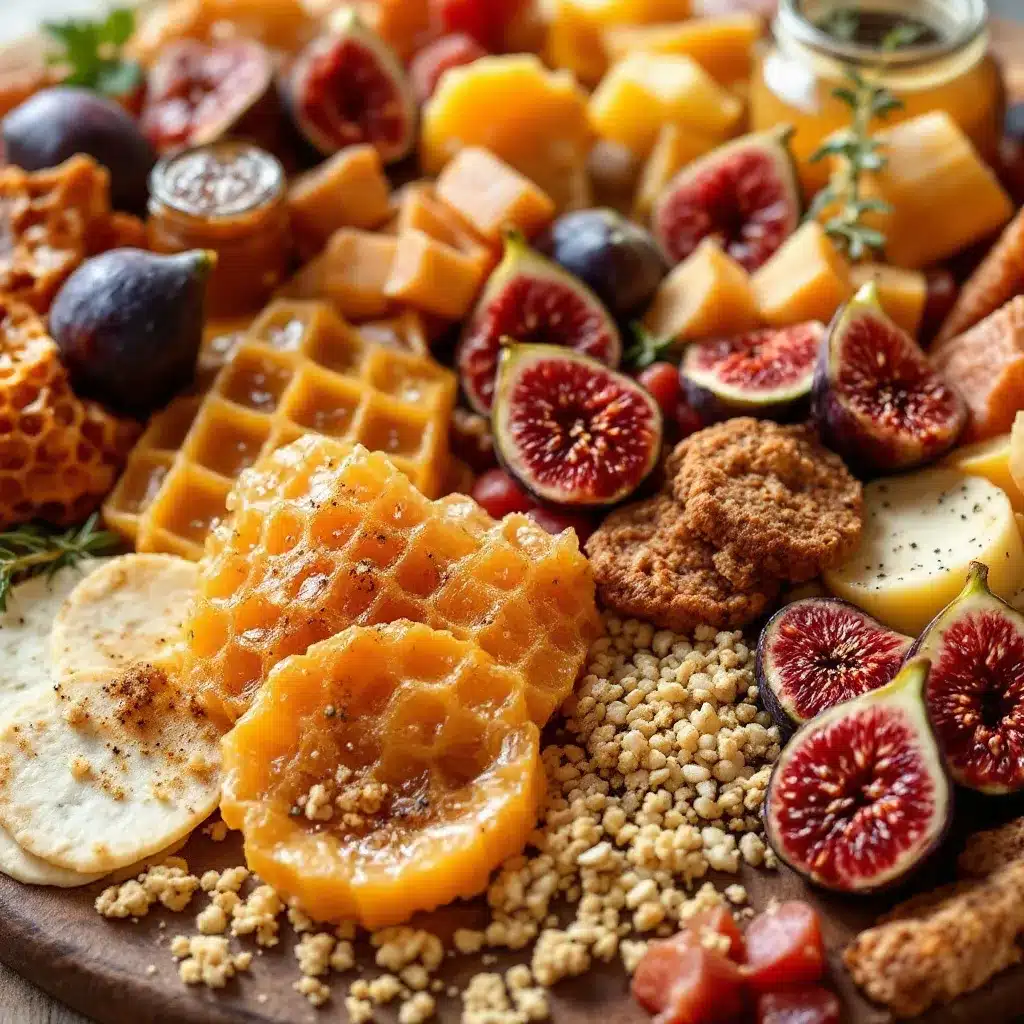
- 4-5 fresh figs, halved or quartered — Look for figs that are plump, soft to the touch, and fragrant. Black Mission or Brown Turkey figs work best here. (If figs aren’t in season, use sliced pear or apple instead.)
- 1 small piece of honeycomb (about 2-3 ounces) — This is the showstopper. The honeycomb adds texture and a mild, floral sweetness that’s different from regular honey. You can find it at specialty grocery stores or farmers’ markets. If you can’t find it, use a high-quality liquid honey like wildflower or orange blossom.
- 1/3 cup pumpkin butter — For spreading on crackers or bread. It adds that unmistakable fall flavor. I like the small-batch bourbon peach butter approach here, but pumpkin butter is the seasonal star.
- 1/3 cup dried apricots — Chewy and tart, they add a nice contrast to all the soft textures.
- 1/3 cup dried cranberries — For a pop of color and a little tangy sweetness.
For the Crunchy Elements
- 1/2 cup candied pecans — You can buy these or make them quickly at home. They add sweetness and crunch. (Tip: toast plain pecans with a little maple syrup and salt for a quick homemade version.)
- 1/2 cup Marcona almonds — These are softer and richer than regular almonds, and they’re already lightly salted. Regular almonds work too, but Marcona are worth the splurge.
- 1 small baguette, sliced and toasted — For the base of all those delicious toppings. You can also use crackers, crostini, or even apple slices for a gluten-free option.
- 1/2 cup crispy chickpeas or pumpkin seeds — Optional, but great for adding another layer of crunch and a little savory element.
For the Savory Accents
- 4 ounces prosciutto — Thinly sliced, salty, and silky. It wraps around fig halves or cheese slices beautifully.
- 4 ounces soppressata or salami — A firmer, spicier cured meat to balance the sweetness. Slice it thin or leave it in small chunks for people to pull apart.
- Fresh rosemary or thyme sprigs — For garnish. They add a beautiful aroma and a pop of green that makes the board look intentional.
- Flaky sea salt (like Maldon) — A pinch over the cheese and figs right before serving makes everything pop.
Equipment Needed
You don’t need much to put this board together, which is part of its charm. Here’s the minimal gear I use:
- A large wooden board or slate platter — At least 12×16 inches. The more surface area, the more room you have to spread things out. I use a reclaimed wood board I found at a flea market, but any large cutting board or serving platter works.
- Small bowls or ramekins — For the pumpkin butter, honeycomb (if you want to keep it contained), and any loose items like dried cranberries or nuts. It keeps things tidy and prevents flavors from mingling too much.
- A sharp chef’s knife — For slicing figs, cheese, and bread. A dull knife will squish your figs and tear your cheese. Trust me on this.
- A cheese knife or two — A soft cheese knife for the goat cheese and a hard cheese knife for the Manchego. Not strictly necessary, but it makes serving easier and looks nice.
- Tongs or small spoons — For serving the prosciutto, nuts, and dried fruit. Keeps things hygienic and tidy.
- A small cutting board — For prepping everything before arranging. I like to slice all the cheese and fruit first, then arrange.
If you don’t have a wooden board, a large baking sheet lined with parchment paper works in a pinch. I’ve done it before when I was traveling, and nobody noticed or cared.
Preparation Method
This is less of a recipe and more of a strategy. The key to a beautiful charcuterie board is layering colors, textures, and shapes. Here’s my step-by-step method:
- Start with your board. Place it on your counter or serving area. Give it a quick wipe with a damp cloth to make sure it’s clean and dry. (Pro tip: If your board is new or hasn’t been used in a while, rub it with a little mineral oil to bring out the wood grain. It makes everything look more intentional.)
- Set out your small bowls. Place the pumpkin butter, dried cranberries, and any loose nuts or seeds in small ramekins. Space them out evenly across the board — this creates natural “anchor points” that break up the visual space. Don’t cluster them all in one corner.
- Place your cheeses next. Manchego should be sliced into thin triangles or small cubes. Goat cheese can be sliced into rounds or left as a log with a knife next to it. Blue cheese can be crumbled or left in a wedge. Put them at different spots on the board — not all together. This encourages people to walk around the board and try different combinations. Leave a little space around each cheese so it’s easy to cut.
- Add the meats. Fold the prosciutto into loose ribbons or rosettes. Don’t lay it flat — the folds create height and texture. Arrange the soppressata slices in a small pile or fan them out. Place these near the cheeses, as people often pair them together.
- Scatter the fruits. Arrange the fig halves and dried apricots in small clusters around the board. Don’t line them up in rows — you want it to look organic, like you just threw it together (even though you didn’t). The figs should be cut-side up so their beautiful interior is visible.
- Add the honeycomb. Place the honeycomb on a small plate or directly on the board near the goat cheese. If it’s a large piece, you can break it into smaller chunks. The honey will start to drip as it sits, so be prepared for a little sticky sweetness. That’s part of the charm.
- Fill in the gaps with crunchy elements. Scatter the candied pecans, Marcona almonds, and crispy chickpeas or pumpkin seeds in the empty spaces. This fills the board visually and gives people something to grab while they decide what they want to build.
- Add the bread or crackers. Arrange the toasted baguette slices and any crackers you’re using around the edges of the board. You can also put them in a small basket next to the board if space is tight. I like to fan them out slightly so they look inviting.
- Garnish and finish. Tuck small sprigs of rosemary or thyme into the gaps between ingredients. Sprinkle a pinch of flaky sea salt over the cheese and fig halves. This is the moment where the board goes from “nice” to “wow.”
- Serve immediately. Charcuterie boards are best at room temperature, so let the cheese sit out for about 20 minutes before serving if it was refrigerated. The flavors are much more pronounced when the cheese isn’t cold.
Cooking Tips & Techniques
I’ve made enough boards to know what works and what doesn’t. Here are some hard-earned lessons:
- Don’t overthink the arrangement. The best boards look effortless. If you spend too much time fussing with symmetry, it ends up looking stiff. Just place things in small clusters and let the colors do the work.
- Cut your cheese at room temperature. Cold cheese crumbles and sticks to the knife. Let it sit out for 20 minutes before slicing. Manchego in particular is much easier to slice when it’s not straight from the fridge.
- Layer flavors intentionally. Think about what combinations you want people to try. A bite of fig with a sliver of Manchego and a drizzle of honeycomb is a classic for a reason. Place those ingredients near each other so people naturally pair them.
- Don’t forget the salt. A pinch of flaky sea salt on the figs and cheese makes a huge difference. It wakes up the flavors and balances the sweetness. I learned this the hard way after making a board that was just… flat.
- Prep everything before you start arranging. Slice all the cheese, cut the figs, toast the bread, and have everything in little bowls ready to go. Once you start placing things on the board, you don’t want to stop and wash a knife. It breaks the flow.
- Make extra. People eat more than you think. A board that looks generous at the start can look sad in 20 minutes. I always make about 20% more than I think I need, especially of the nuts and dried fruit.
Variations & Adaptations
This board is endlessly adaptable. Here are some of my favorite twists:
- Vegan version: Skip the cheese and meat entirely. Use a cashew-based “cheese” spread, marinated artichoke hearts, roasted chickpeas, and plenty of fresh and dried fruit. The honeycomb can be swapped with agave or maple syrup. It’s still gorgeous and satisfying.
- Gluten-free version: Replace the baguette with gluten-free crackers, rice cakes, or apple slices. The rest of the board is naturally gluten-free, so it’s an easy swap.
- Savory-heavy version: If you’re not a sweets person, double the meat and cheese, add some cornichons, olives, and whole-grain mustard. Skip the pumpkin butter and honeycomb, and use a sharp mustard or chutney instead. This works great for a buffalo chicken dip charcuterie board vibe.
- Seasonal swap: In the summer, use fresh peaches or berries instead of figs. In the winter, swap in pomegranate seeds, persimmons, and dried figs. The structure stays the same, but the flavors change with the calendar.
- Add a warm element: Sometimes I add a small bowl of warm, spiced pecans or a little dish of hot honey. The contrast between warm and cold, sweet and spicy, is incredible. It takes the board from good to unforgettable.
I once made a version with a homemade honey balsamic fig jam with fresh thyme instead of the honeycomb, and it was honestly one of the best decisions I’ve made in the kitchen. The tangy balsamic cuts through the sweetness in a way that’s just perfect.
Serving & Storage Suggestions
This board is best served immediately, but there are a few tricks to keep it fresh if you’re prepping ahead:
- Serving temperature: Serve everything at room temperature. Take the cheese out of the fridge 20-30 minutes before serving. The honeycomb should be at room temperature too — cold honeycomb is hard to spread and doesn’t drip as beautifully.
- Presentation: Arrange the board on a large wooden platter or slate board. I like to put it in the center of the table so everyone can reach it. Add small serving utensils for the spreads and a cheese knife for each wedge.
- What to serve with it: This board pairs beautifully with a crisp white wine like Sauvignon Blanc or a light red like Pinot Noir. A dry cider works too. For non-alcoholic options, sparkling water with a slice of apple or a warm cup of spiced tea is lovely.
- Storage: If you have leftovers (unlikely, but possible), store the components separately. Cheese should be wrapped in parchment paper and then plastic wrap, then refrigerated. Fruits and nuts can go in airtight containers at room temperature. The bread should be stored in a paper bag to stay crisp.
- Reheating: The only thing you might want to reheat is the bread. Pop the baguette slices in a 350°F oven for 5 minutes to crisp them back up. Everything else is served cold or at room temperature.
- Flavor development: The honeycomb and fig flavors actually get better after a few hours at room temperature. If you’re making this for a party, you can assemble the board up to 2 hours ahead and leave it covered with a clean kitchen towel until guests arrive. Just add the fresh herbs right before serving.
Nutritional Information & Benefits
This board is more about pleasure than precision, but here’s a rough idea of what you’re working with per serving (about 1/6 of the board):
- Calories: Approximately 450-550 per serving (depending on how much cheese and meat you grab)
- Protein: 18-22 grams (from cheese, nuts, and meat)
- Fat: 30-35 grams (mostly healthy fats from nuts and cheese)
- Carbohydrates: 35-40 grams (from fruit, bread, and honey)
- Fiber: 6-8 grams (from figs, nuts, and dried fruit)
The figs are a fantastic source of fiber and potassium, while the nuts provide healthy fats and vitamin E. The cheese adds calcium and protein. The honeycomb contains antioxidants and has antibacterial properties. It’s not a health food, but it’s certainly not junk either. It’s real food, in its most beautiful form.
If you’re watching your sugar intake, you can reduce the honeycomb and dried fruit. If you’re low-carb, skip the bread and crackers and use cucumber slices or endive leaves instead. The board is flexible enough to accommodate most dietary preferences.
Conclusion
This Perfect Fall Harvest Charcuterie Board with Honeycomb and Figs has become my go-to for everything from quiet nights in to full-blown holiday gatherings. It’s the kind of recipe that makes you feel like you’ve got it all together, even when you’re just throwing things on a board and hoping for the best. And honestly, that’s the kind of cooking I love most — low stress, high reward, and full of flavor.
I hope you make this board your own. Swap in your favorite cheeses, switch up the fruit, add a little extra honey if that’s your thing. The beauty of a charcuterie board is that there are no rules. Just good ingredients, arranged with a little love, and shared with people you care about.
If you make this, I’d love to hear about it. Drop a comment below, tag me in your photos, or tell me what variations you tried. Did you add a warm element? Did you swap the figs for pears? Did you make it for a football game day charcuterie cups situation? I want to know. Happy snacking, friends!
Frequently Asked Questions
Can I make this board ahead of time?
Yes, you can assemble the board up to 2 hours ahead. Just cover it with a clean kitchen towel and keep it at room temperature. Add the fresh herbs and any fragile items (like the honeycomb) right before serving.
What if I can’t find fresh figs?
No problem at all. Swap in sliced pear, apple, or even fresh grapes. You can also use dried figs if that’s what you have — just slice them in half and arrange them the same way. The flavor will be a little different, but still delicious.
How do I store leftover charcuterie board ingredients?
Store each component separately. Cheese should be wrapped in parchment paper and then plastic wrap before refrigerating. Fruits and nuts go in airtight containers at room temperature. Bread goes in a paper bag. Leftover meat should be wrapped tightly and refrigerated. Most items will keep for 3-5 days.
Can I use regular honey instead of honeycomb?
Absolutely. A good quality liquid honey works perfectly. Just put it in a small bowl or ramekin with a small spoon for drizzling. The honeycomb adds texture, but the flavor is similar. Wildflower or orange blossom honey are great choices for this board.
What wines pair best with this board?
A crisp white like Sauvignon Blanc or a light red like Pinot Noir are classic choices. For something a little different, try a dry rosé or a sparkling wine. If you’re serving beer, a Belgian witbier or a hard cider works beautifully with the fall flavors.
Pin This Recipe!
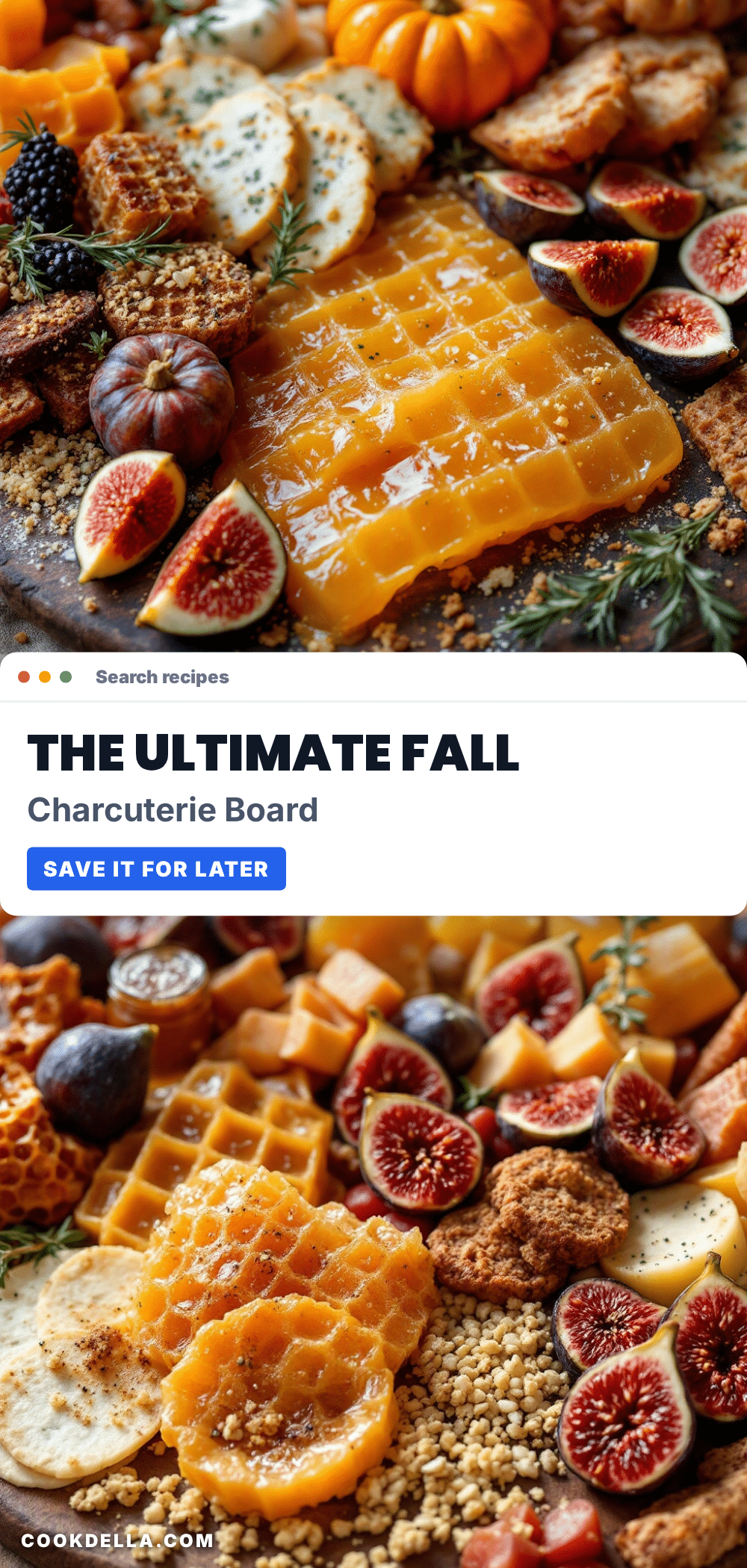
Perfect Fall Harvest Charcuterie Board with Honeycomb & Figs
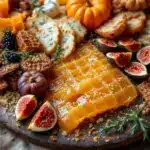
A stunning autumn charcuterie board featuring ripe figs, honeycomb, aged Manchego, and crunchy nuts. Ready in 20 minutes, it’s perfect for entertaining or a cozy night in.
- Prep Time: 20 minutes
- Cook Time: 0 minutes
- Total Time: 20 minutes
- Yield: 6 servings 1x
- Category: Appetizer
- Cuisine: American
Ingredients
- 8 ounces aged Manchego
- 6 ounces soft goat cheese (chèvre)
- 4 ounces blue cheese (like Gorgonzola or Roquefort)
- 4–5 fresh figs, halved or quartered
- 1 small piece of honeycomb (about 2–3 ounces)
- 1/3 cup pumpkin butter
- 1/3 cup dried apricots
- 1/3 cup dried cranberries
- 1/2 cup candied pecans
- 1/2 cup Marcona almonds
- 1 small baguette, sliced and toasted
- 1/2 cup crispy chickpeas or pumpkin seeds (optional)
- 4 ounces prosciutto
- 4 ounces soppressata or salami
- Fresh rosemary or thyme sprigs for garnish
- Flaky sea salt (like Maldon)
Instructions
- Start with your board. Place it on your counter or serving area. Give it a quick wipe with a damp cloth to make sure it’s clean and dry.
- Set out your small bowls. Place the pumpkin butter, dried cranberries, and any loose nuts or seeds in small ramekins. Space them out evenly across the board.
- Place your cheeses next. Manchego should be sliced into thin triangles or small cubes. Goat cheese can be sliced into rounds or left as a log with a knife next to it. Blue cheese can be crumbled or left in a wedge. Put them at different spots on the board.
- Add the meats. Fold the prosciutto into loose ribbons or rosettes. Arrange the soppressata slices in a small pile or fan them out. Place these near the cheeses.
- Scatter the fruits. Arrange the fig halves and dried apricots in small clusters around the board. The figs should be cut-side up so their beautiful interior is visible.
- Add the honeycomb. Place the honeycomb on a small plate or directly on the board near the goat cheese. If it’s a large piece, you can break it into smaller chunks.
- Fill in the gaps with crunchy elements. Scatter the candied pecans, Marcona almonds, and crispy chickpeas or pumpkin seeds in the empty spaces.
- Add the bread or crackers. Arrange the toasted baguette slices and any crackers you’re using around the edges of the board.
- Garnish and finish. Tuck small sprigs of rosemary or thyme into the gaps between ingredients. Sprinkle a pinch of flaky sea salt over the cheese and fig halves.
- Serve immediately. Let the cheese sit out for about 20 minutes before serving if it was refrigerated.
Notes
Prep everything before arranging. Cut cheese at room temperature for easier slicing. Don’t overthink the arrangement; the best boards look effortless. Make about 20% more than you think you need. For a vegan version, skip cheese and meat and use cashew-based cheese spread, marinated artichoke hearts, and agave or maple syrup instead of honeycomb.
Nutrition
- Serving Size: 1/6 of the board
- Calories: 450550
- Sugar: 2025
- Sodium: 8001000
- Fat: 3035
- Saturated Fat: 1012
- Carbohydrates: 3540
- Fiber: 68
- Protein: 1822
Keywords: charcuterie board, fall harvest, figs, honeycomb, cheese board, autumn appetizer, entertaining